
Commercial irrigation services cut water waste and keep visible landscapes green, but can they really save money and avoid ugly brown spots during a Georgia drought?
Drought brings restrictions, higher utility bills, and pressure to keep properties looking professional. A smart system reduces water use by 25–50% while maintaining curb appeal, using real-time weather data and verified savings from trusted brands.
Think of high-tech irrigation as control, data, and consistency—not simply watering more. This page covers assessment, design, installation, upgrades, repair, and ongoing maintenance so you can modernize without ripping everything out.
For property managers, stakes are higher than a home lawn: brand image, tenant satisfaction, visitor experience, and liability from overspray or runoff matter. Expect fewer dry spots, fewer complaints, lower water use, and predictable performance across seasons.
Key Takeaways
- Smart controllers and sprinkler selection cut water use and protect landscapes.
- Well-maintained systems can lower costs by 25–50% while staying green.
- Services include assessment, design, installation, upgrades, repair, and upkeep.
- Commercial properties face higher reputation and liability risks than homes.
- Modernization focuses on upgrades and recalibration, not full replacement.
Why Georgia Drought Conditions Demand Smarter Water Management for Commercial Properties
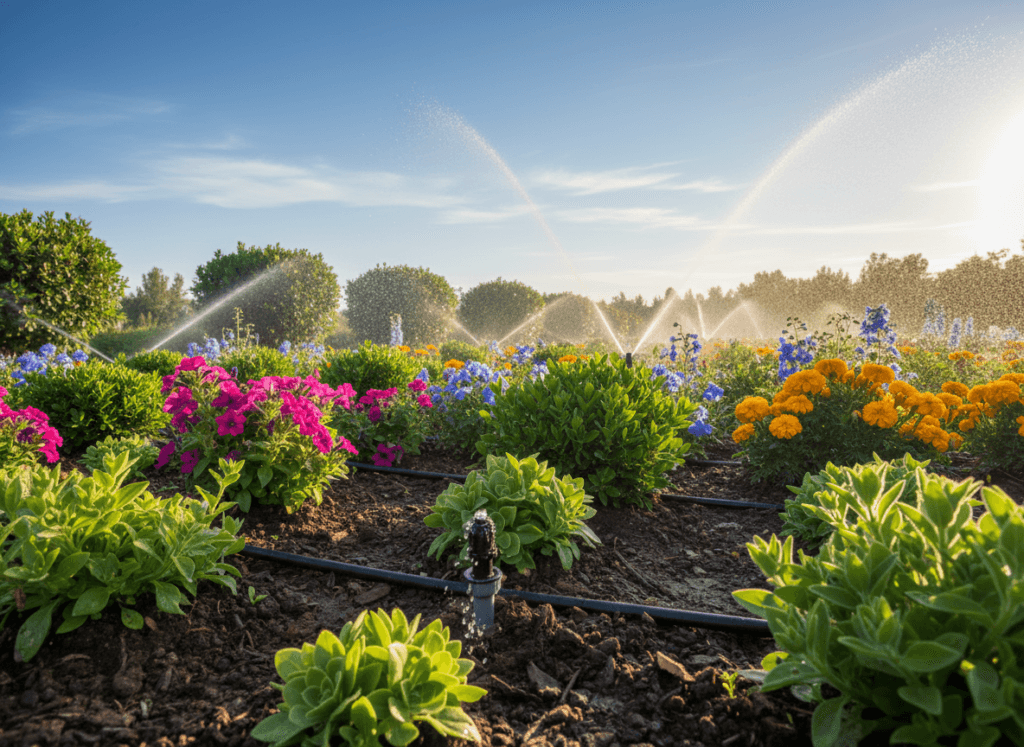
Hot, dry months in Georgia mean limited watering windows and fast stress on turf and beds across a site. That reality forces property teams to shift from routine schedules to targeted water plans.
Protecting landscape health when too little—or too much—water causes damage
Too little water causes plants to wilt and die. Too much water can be just as harmful by promoting disease, shallow roots, and runoff that erodes soil.
Good management links plant needs, soil type, and local climate so the planted areas stay healthy without waste.
How water waste impacts utility bills, sustainability goals, and your bottom line
Wasted water raises bills and makes budgeting unpredictable. It also undermines ESG reporting and local drought messaging to customers and tenants.
| Issue | Impact | Smart Response |
|---|---|---|
| Under-watering | Wilting, plant loss, poor curb appeal | Adjust run times by soil moisture and sun exposure |
| Over-watering | Disease pressure, runoff, wasted expense | Zone-specific application and root-depth targeting |
| Water waste | Higher bills, poor sustainability metrics | Use weather-based controllers and audits |
What “right-sized” watering looks like for high-visibility spaces
Right-sized watering matches application to soil, plant type, sun, slope, and foot traffic. The goal is healthy turf and beds with minimal intervention.
Smart management saves property managers time by reducing emergency fixes and landscape replacements. To hit this balance, the next step is a site-based assessment and modern system choices.
Commercial Irrigation Services Built Around Your Property’s Water Needs
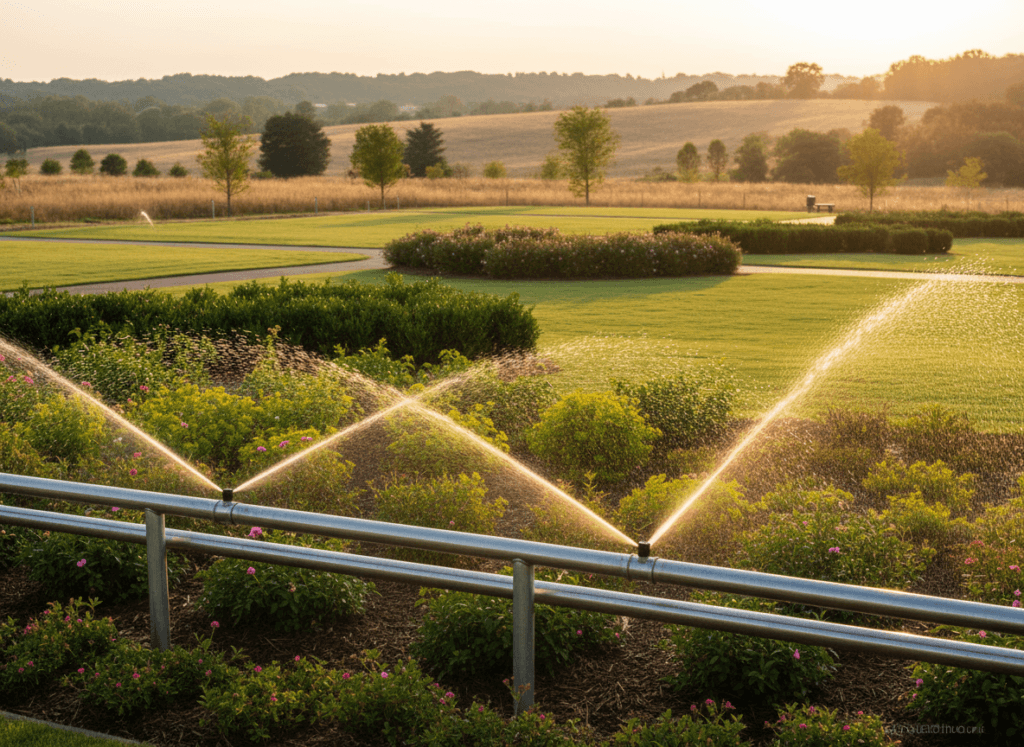
Effective water management begins when experts map zones and measure flow across your property. A full site assessment checks pressure, soil type, sun and shade patterns, slope, and plant needs so recommendations match what the land actually requires.
Site assessment and irrigation planning
Pros from firms like Davey verify pressure and flow, map zones, and record root-depth and plant water use. That data guides clear, site-specific plans rather than guesswork.
Design and installation for reliable coverage
Design goals focus on uniform coverage, reduced overspray on pavement, and minimized runoff. Installations are phased to limit disruption and test zones for consistent performance.
Drip, sprinkler, and smart control choices
Drip targets root zones in beds and shrubs. Sprinkler zones serve turf and wide open areas. Many properties use hybrid systems to match microclimates.
Smart controllers (Weathermatic via Maven) act as the system brain, adjusting run times in real time and giving managers data to verify savings and spot anomalies.
| Task | Why it matters | Typical outcome |
|---|---|---|
| Site audit | Maps flow, soil, sun, and plant needs | Targeted recommendations |
| Design & installation | Reduces overspray and runoff | Even coverage and fewer dry spots |
| Smart control | Real-time adjustments and data | Lower water use and verified savings |
Smart Irrigation System Upgrades That Cut Water Waste Without Sacrificing Curb Appeal
Upgrading key components can cut water waste fast, without ripping out a working irrigation system. Targeted work focuses on fixes that preserve turf and beds while shrinking bills.
Recalibration and sprinkler adjustments
A full recalibration audits each zone, corrects arc and trajectory, replaces mismatched nozzles, aligns heads, and resolves pressure issues. These adjustments stop overspray on sidewalks, limit runoff at curbs, and erase persistent dry spots that harm curb appeal.
Timer-controlled schedules tuned to seasonal demand
Timer-based programs use seasonal settings and cycle-and-soak for clay or sloped areas. They keep properties compliant with drought rules while avoiding plant stress and unnecessary runtime.
Data-backed optimization and verified savings
Weather-enabled controllers (Maven/Weathermatic) adapt in real time and provide clear reports. Optimization and proper care can cut water costs by 25–50% where site conditions allow. When diagnostics find broken parts, targeted repair prevents downtime and landscape loss.
| Upgrade | Fixes | Expected Outcome |
|---|---|---|
| Recalibration | Arc, nozzle, pressure mismatches | Reduced overspray, fewer dry spots |
| Smart timer | Seasonal scheduling, cycle-and-soak | Compliance and lower run time |
| Weather control | Rain, humidity, temp adjustments | Verified 25–50% water savings |
Commercial Irrigation Repair and Diagnostics to Prevent Downtime and Landscape Loss
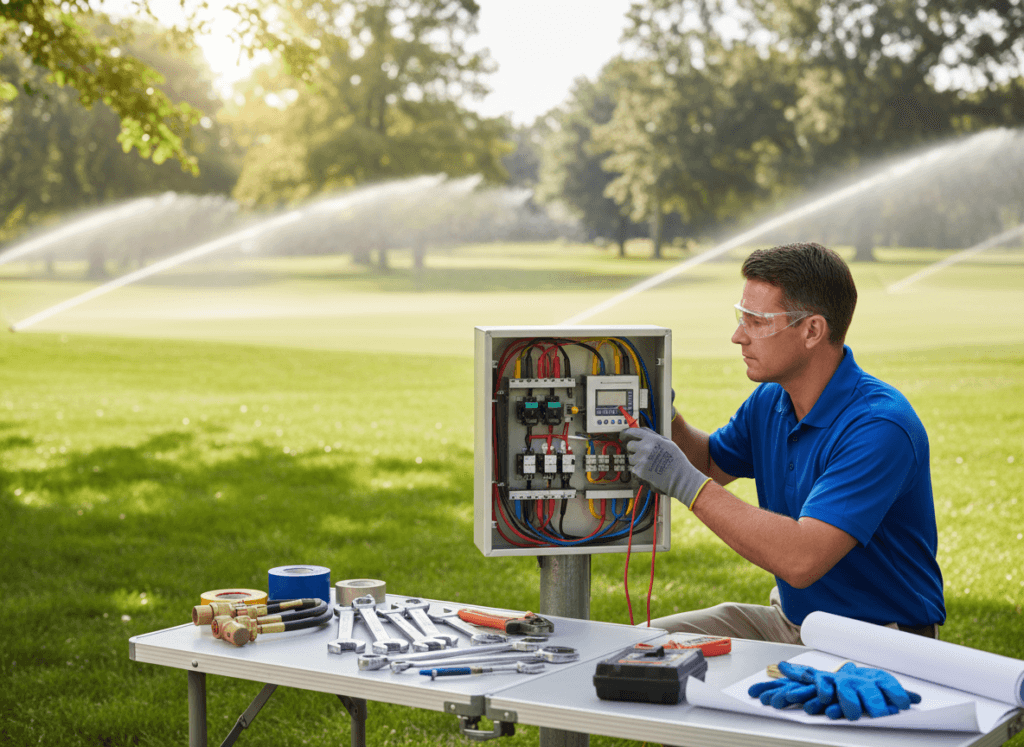
When a system shows signs of failure, fast diagnostics stop small faults from becoming landscape disasters. Quick action keeps turf and planter beds healthy during dry spells.
Common issues include hidden leaks, low or high pressure, uneven zones, stuck valves, and controller wiring faults. These problems cause coverage gaps and stress plants fast during drought.
Practical troubleshooting follows a clear path: isolate zones, verify pressure and flow, inspect heads and nozzles, test valves and backflow devices, and confirm controller programming. Fast diagnostics reduce downtime and costly replacements.
- Targeted repairs: replace valves, overhaul backflow devices, repair line breaks, and update worn sprinkler heads for better distribution.
- Safety and compliance: fixing backflow protects drinking water and stopping overspray prevents slippery walkways and complaints.
- When to overhaul: choose a partial or full rebuild if breaks recur, components are obsolete, pressure imbalances persist, or controller failures repeat over years.
| Failure Point | Common Cause | Typical Repair |
|---|---|---|
| Hidden leak | Brittle pipe, root damage | Locate and repair line break; pressure test |
| Valve or stuck head | Debris, wear | Replace valve or nozzle; recalibrate arc |
| Controller/wiring fault | Age, rodents, lightning | Repair wiring, update controller, reprogram zones |
| Backflow device | Failed check, corrosion | Overhaul or replace assembly to meet code |
An expert repair team minimizes disruption, restores zone performance, and reduces repeat failures. After repairs, schedule routine maintenance to keep systems efficient year-round and extend life, as Davey and Arcadia Landscape recommend.
Routine Maintenance Plans That Keep Irrigation Systems Efficient Year-Round
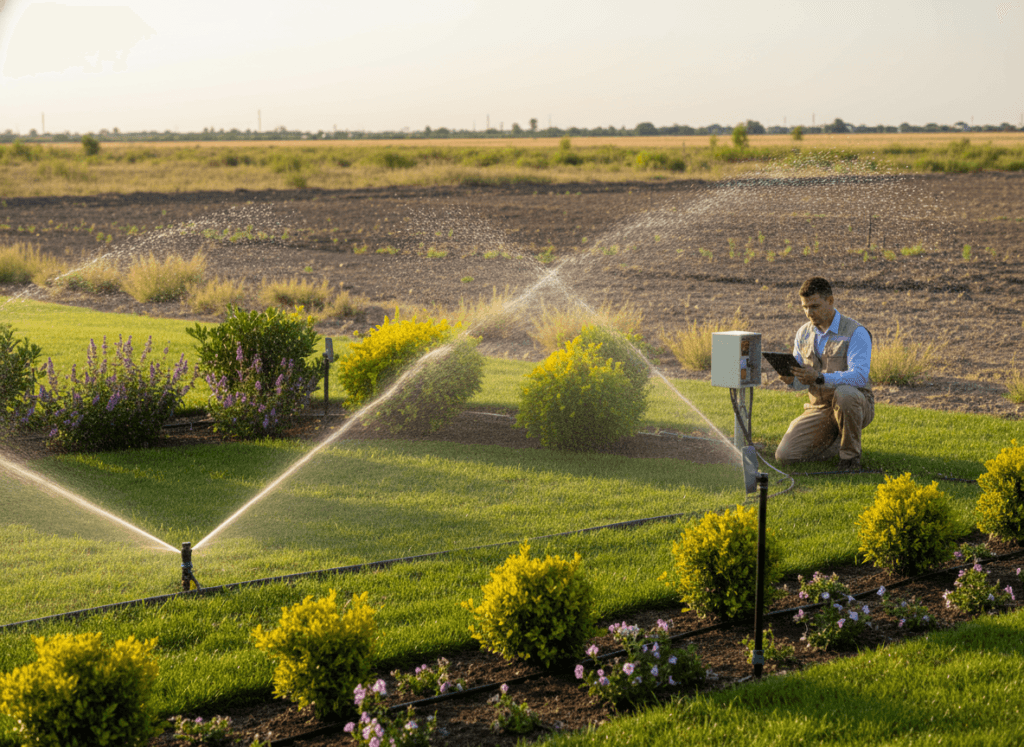
Regular upkeep prevents small faults from escalating into costly fixes and keeps landscapes presentable year after year.
Preventative maintenance means systematic inspections, zone testing, head and nozzle evaluation, pressure checks, and controller review. These tasks stop small leaks and misaligned heads before lawns and beds decline.
Seasonal startup and shutdown
Proper startup and shutdown protect systems after long inactivity. Technicians check valves, flush lines, and verify programming to reduce stuck valves and leaks.
Maintenance cadence options
- Semi-Annual: spring and fall checks with seasonal controller adjustments.
- Semi-Annual + Summer: adds May–September monitoring for peak demand.
- Tri-Annual: spring, August, and fall checks for added midsummer care.
- Monthly: recommended for high-traffic properties where appearance matters most.
- Every-Other-Month & Quarterly: balanced coverage for budget control.
| Plan | What it includes | Best for |
|---|---|---|
| Semi-Annual | Spring/fall checks, controller tuning | Office parks, moderate lawns |
| Semi-Annual + Summer | Seasonal checks plus May–Sep monitoring | Sites with heavy summer stress |
| Monthly | Frequent checks, quick fixes, documentation | High-visibility properties |
Consistent visits create documentation, predictable schedules, and fewer surprises for property managers and customers. Over years, proper care reduces emergency expenses and extends system life—data-backed benefits cited by Davey and Arcadia Landscape.
Conclusion
A simple site assessment quickly reveals high-impact upgrades that save water without harming curb appeal.
A well-designed, well-maintained irrigation system can cut water use 25–50% while keeping a vibrant landscape. Smart controllers like Weathermatic via Maven adapt in real time and give verified savings with clear data.
Make drought-ready choices: assess the property, right-size watering, upgrade controls and hardware where it pays off, and keep performance steady with routine monitoring. This approach reduces waste, limits repairs, and stabilizes operating costs.
Don’t wait for visible damage. Request a site assessment today, plan upgrades today, and set up ongoing maintenance today to protect results this season and for years to come.
Protect your landscape before damage occurs. Schedule a local site assessment today, plan your irrigation upgrades, and set up ongoing maintenance to ensure your property stays healthy and water-efficient now and for years to come.

4 Responses