How to design outdoor living space can feel impossible in a small backyard, but is size really the limit?
Think of your yard as an extra room in your home. With clear zones and a few strong focal points, a compact plot can handle morning coffee, casual meals, and quiet evenings without feeling cramped.
This guide walks White, GA homeowners through a practical, step-by-step approach: set purpose first, check site conditions, plan circulation, then pick durable finishes and comfort features. The best results come from fitting design choices around real routines — weeknight dinners, weekend guests, or a quiet cup before sunrise.
Expect guidance on shade for hot afternoons, wind-aware seating, and finishes that hold up over time. Every suggestion aims at one goal: make your outdoor living spaces feel larger, calmer, and easier to use every day.
Key Takeaways
- Treat the backyard as an extension of the home with clear zones.
- Prioritize purpose, then site, then layout and materials.
- Pick a few high-impact focal points rather than overcrowding.
- Plan shade and seating with local sun and wind in mind.
- Design around real routines for lasting comfort and use.
How to design outdoor living spaces that fit your life in a small backyard
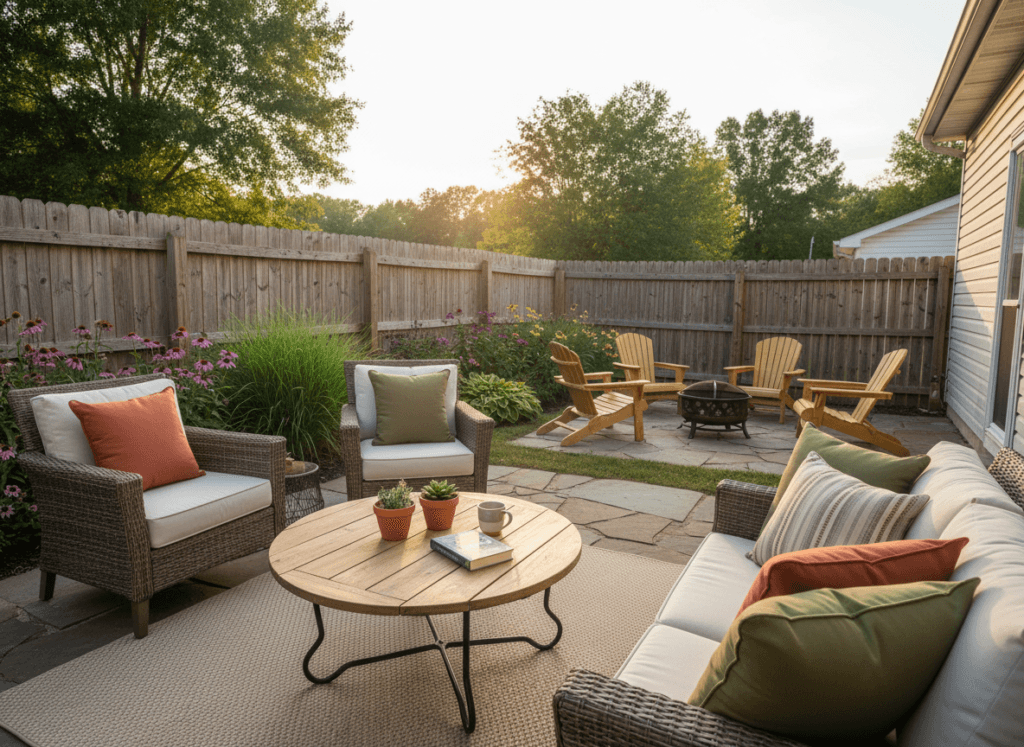
Prioritizing real uses turns limited outdoor square footage into a useful extension of home. Start by listing non-negotiables: lounging, dining, entertaining, a kid or pet zone, or a quiet work corner.
Rank your top two uses and plan around them. A small space should serve daily routines first, then occasional parties. This keeps the yard useful every day rather than cluttered with competing functions.
Right-size for guests and routines
Choose seating sized for your typical group. A family of four needs different furniture than hosts of eight. Pick a compact table or a foldable option if gatherings are rare.
Match style with life and home
Select materials that suit habits: low-fuss finishes for busy households, softer textiles for relaxed weekends. Aragon Landscaping LLC suggests reflecting your lifestyle so the area feels like home.
- Rank top 2 uses first; add secondary features only if space allows.
- Plan for micro-moments: morning coffee, quick breaks, and evening unwind time.
- Coordinate colors and patterns with interior palettes for visual continuity.
| Primary Use | Right-Size Seating | Style & Material Tip |
|---|---|---|
| Daily dining (family of 4) | Small square table + 4 chairs | Ceramic table, washable cushions |
| Casual entertaining (up to 8) | Bench seating + pop-up table | Durable wood-look composite |
| Quiet work or reading nook | Single lounge chair + side table | Soft textiles, shaded spot |
| Kids & pets play zone | Open ground with movable seating | Low-maintenance turf or mulch |
Read your White, GA site conditions before you plan the layout
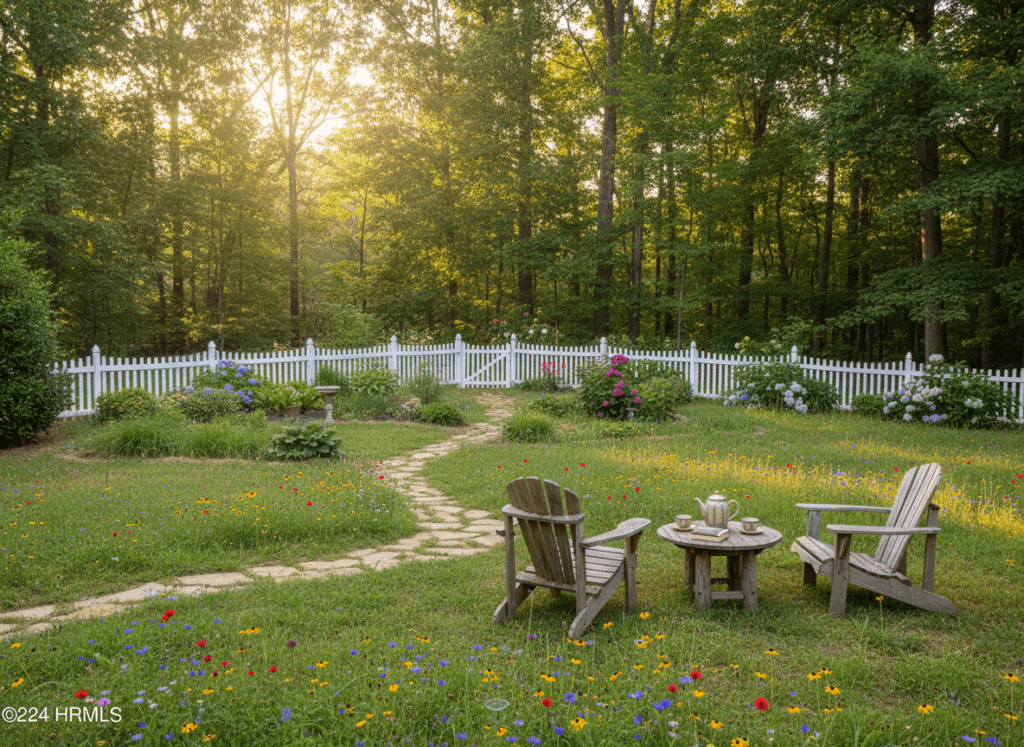
Start with a week of careful observation; the yard will tell you where comfort works best.
Note morning and afternoon light, heat near walls and fences, and where shade falls. Track prevailing breeze by time of day so seating and any fire feature avoid smoke and wind tunnels.
Track sun exposure and heat
Prioritize shade where people sit during peak afternoon hours. Use umbrellas, pergolas, covered patios, or trees for cooling, as Linda Hagen advises.
Note wind patterns
Map wind direction at several times each day. Place dining and fire elements upwind or shielded so smoke does not reach seats.
Use surroundings to your advantage
- Use existing trees as instant cooling and visual softening; plan new trees where long-term shade is needed.
- “Borrow the view”: angle chairs toward the best sightlines and screen utilities with hedges or low walls.
- Decide on privacy early—fence height or green screening guides layout and future landscape choices.
| What to Watch | When | Action |
|---|---|---|
| Sun & heat | Mid-afternoon | Prioritize shade at seating |
| Wind | Meal times | Adjust dining placement |
| Views & eyesores | Any time | Angle seating; add screens |
Small-yard layout planning that works like an indoor floor plan
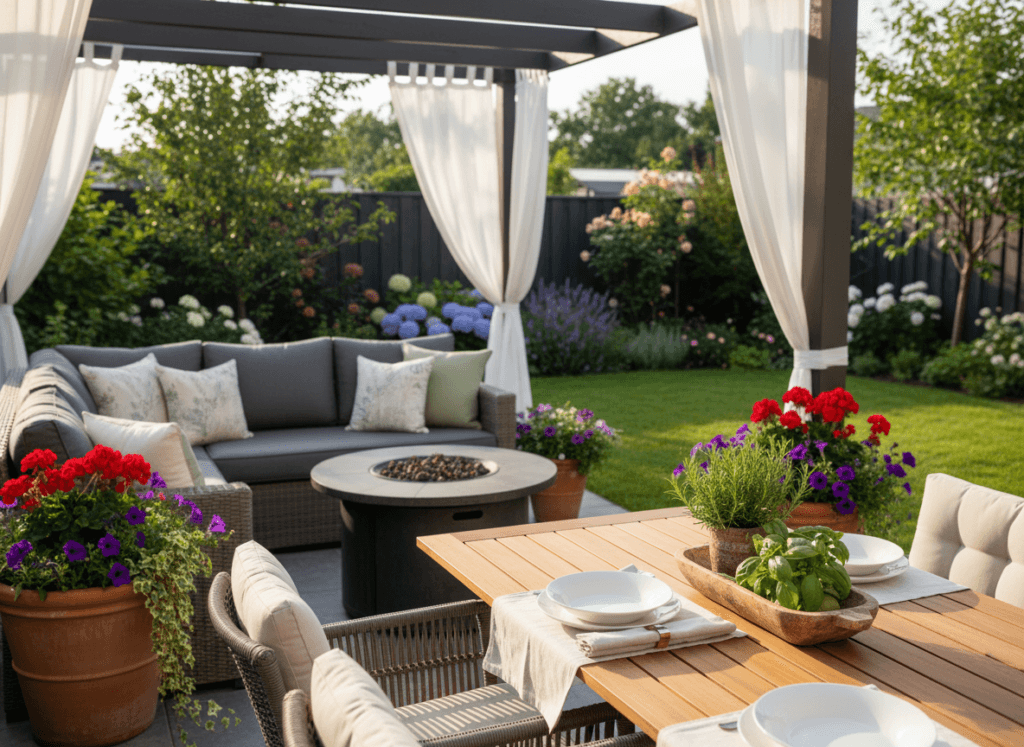
Treat a small yard like a scaled-down floor plan: clarity and flow matter more than square footage. Define movement first, then arrange zones—lounge, dining, and a quiet corner—around those routes. David Pfeiffer suggests this approach so the yard functions like an extra room.
Create outdoor “rooms” with clear pathways and functional connections to the house
Start by marking main circulation lines. Keep paths aligned with doors and high-traffic points to avoid tight pinch points.
Place dining near the kitchen for easier serving and cleanup
Linda Hagen recommends siting the dining area close to the kitchen. It makes serving faster, cuts spills, and raises everyday use.
Build in at least one quiet corner for coffee, reading, or decompression time
Reserve a small chair set, bench, or bistro table away from the main activity zone. That quiet spot gives a private space for short breaks.
Use strategic hardscaping to create zones without crowding the space
Patio edges, low seat walls, and slight grade changes define zones without clutter. Aragon Landscaping LLC notes that subtle hardscaping elements shape flow and make an area feel larger.
For occasional entertaining, add a flexible standing zone near the grill or drinks area so guests can mingle without blocking circulation. This simple layout strategy makes a compact backyard far more useful and pleasant.
Hardscape and structure choices that maximize space and comfort
Smart choices in patio and deck materials make a tight yard feel roomy and last for years.
Start with a durable base: natural stone or composite decking resists weather and improves curb appeal, a point Aragon Landscaping LLC stresses. Keep the hard surface just large enough for stable chairs and a dining area, then soften edges with mulch, turf, or planted strips so the yard avoids a boxed-in feel.
Choose materials that hold up under frequent use
Pavers and natural stone give traction and a high-end look. Composite decking stands up to moisture and needs less sealing than wood. Poured concrete is affordable but choose textured finishes for safety.
Mix hard and soft surfaces for comfort
Keep enough firm area for table and chairs, then add a softer band of plants or turf nearby. This balance makes the area feel larger and more inviting.
Covered options and flexible screens
Pergolas and pavilions bring shade without closing the yard off. Screened zones or retractable canopies handle sun, bugs, and changeable weather while keeping sightlines open.
Drainage, light, and long-term durability
Plan slope and downspouts during construction so water sheds away from patios and walls. Run conduit for lights and outlets now to avoid later digging that disrupts finishes.
- Pick materials for traction and low upkeep.
- Right-size hardscape and keep green edges.
- Use pergolas or retractable screens for flexible cover.
- Design slope and power access before final surfacing.
| Option | Durability | Traction & Safety | Best Small-yard Use |
|---|---|---|---|
| Pavers | High; easy spot repair | Good; textured surfaces available | Dining patios that may shift with frost |
| Poured concrete | Medium; economical | Depends on finish; add texture | Large level areas and simple patios |
| Natural stone | Very high; premium look | Excellent; natural texture | Feature patios and focal areas |
| Composite decking | High; low maintenance | Good; slip-resistant options | Raised decks near doors and seating |
Landscaping and plant design for privacy, shade, and low maintenance
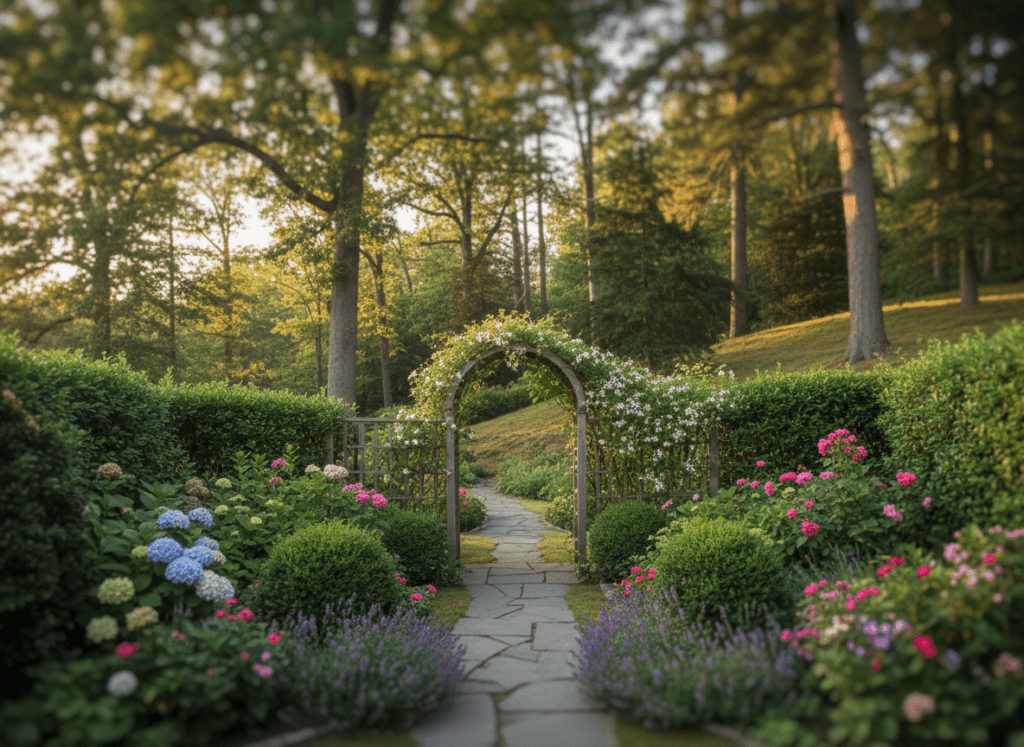
Planting with purpose makes narrow yards feel private and cool, while keeping maintenance minimal. Use trees and shrubs where they block hot sun and act as wind buffers near seating. Aragon Landscaping LLC recommends placing green elements around activity zones for comfort first.
Use trees and shrubs for shelter and boundaries
Select small-mature trees for tight plots. Layer evergreen shrubs under taller trunks to form a natural screen that also tames gusts.
Pick native, easy-care plants
Native plants fit local soil and climate, so they need less pruning and water. That lowers upkeep and supports a balanced environment.
Place pollinator plants away from dining and kitchen areas
Avoid heavy-flowering beds next to an outdoor kitchen or eating spot. This keeps bees and flies out of meal zones.
Think vertical when ground room is scarce
Green walls, trellises, and modular panels give instant privacy without losing patio area. Use climbing vines on panels for fast screening.
- Plant for comfort: shade and wind buffering near seats.
- Lean on native plants for low work and long life.
- Add herb boxes near the kitchen for easy reach.
| Feature | Best Use | Maintenance |
|---|---|---|
| Small-mature trees | Shade and cooling | Low–medium |
| Evergreen shrubs | Year-round privacy | Low |
| Green walls/trellises | Vertical screening | Low |
| Self-watering planters | Herbs and kitchen greens | Very low |
Furnishing a compact outdoor living space for real comfort</h2>
The right furniture makes a small backyard feel intentional and cozy. Match pieces with how you plan use: lounging, meals, or quick drinks. Aim for fewer, better items that fit paths and doors.
Zone by furniture
Pick lounge seating where relaxation is the main goal. Use a compact dining set near the kitchen for easy serving. Add one or two movable side tables for snacks and cocktails, a tip from David Pfeiffer via Linda Hagen.
Materials, comfort, and storage
Choose weather-resistant frames and washable cushions suited for our climate. Benches with hidden storage or a deck box keep cushions dry and clutter hidden. That keeps the area ready for guests.
| Zone | Recommended Piece | Benefit |
|---|---|---|
| Relax | Small lounge sofa | Comfort, focal spot |
| Meals | Compact dining set | Fits compact footprints |
| Flex | Movable side tables | Adaptable for guests |
Before finalizing, stand, pull a chair, and walk the route. Make sure circulation stays clear and seating can be used without blocking paths.
Feature elements that make a small backyard feel like a destination
Pick one or two signature elements and your small backyard becomes a true destination, not just a patch of grass.
Choose features that lift comfort and keep circulation clear. Each addition should fit paths and doors without blocking access from the house.
Outdoor kitchen essentials for small areas
For a compact outdoor kitchen, start with a durable hardscape base and a quality grill. Add a narrow prep ledge and closed storage for utensils and cushions.
Include dedicated task lighting for safe cooking and a small splash of counter for plating. These choices make the kitchen functional without crowding the area.
Water feature ideas that fit tight footprints
Even a slim rill, wall fountain, or bubbling basin adds calm. A simple trickle gives sound and motion without taking much room.
Place water near seating but out of circulation lines so it soothes without creating a trip hazard.
Fire features for longer evenings
Fire pits suit informal groups and lower profiles. A small fireplace reads formal and needs more clearance.
Always site any fire feature with wind and smoke travel in mind. Orient seats upwind or use a low screen so smoke doesn’t cross dining or doorways.
Pool decisions for tight yards
Plunge pools or lap-style narrow pools fit smaller yards best. Add underwater lighting and a spa-style jet or bench for a luxe feel.
Keep pool edges simple so circulation flows around the water without forcing awkward seating.
- Define destination features as no more than two signature elements.
- Prioritize durable surfacing, task lighting, and storage for any kitchen area.
- Pick compact water ideas that add sound without crowding paths.
- Site fire elements with wind and smoke in mind to protect comfort.
- If adding a pool, favor plunge proportions and lighting for a personalized touch.
| Feature | Best For | Space Impact |
|---|---|---|
| Fire pit | Casual gatherings | Low profile; flexible seating |
| Small fireplace | Cozy focal point | Higher clearance; fixed layout |
| Plunge pool | Cooling + spa feel | Compact footprint; adds evening lighting |
Lighting, ambiance, and smart tech to extend outdoor living time
Evenings improve dramatically with layered light that balances task areas and cozy corners. Good lighting stretches usable time and makes a compact space feel intentional.
Start with task lighting at the grill and prep area. Add pathway fixtures for safe steps. Uplight trees and fence lines to lift the perceived boundary of the yard.
Avoid harsh LEDs by choosing warm color temperatures and consistent fixture quality. Matching color keeps glare low and the patio inviting after dusk.
Use lanterns, string lights, and solar fixtures for atmosphere. Place them so they define zones without creating clutter. Soft textiles—outdoor rugs, pillows, and weather-ready throws—anchor seating and make an outdoor living space feel like an extra room.
Smart controls (timers, dimmers, and zones) cut hassle and let you set scenes that extend evening use. Night test tip: check the yard view from inside the house and adjust so the scene looks warm, not overlit.
| Element | Best Use | Color Temp | Placement Tip |
|---|---|---|---|
| Task fixtures | Grill and prep | 2700–3000K (warm) | Mount under awnings or over counters |
| Pathway lights | Steps and routes | 2700K | Low fixtures at edges; avoid glare |
| Uplights | Trees and walls | 2700–3000K | Aim up at trunks or fence faces for depth |
| Decorative lights | Ambience | Match existing color | Cluster sparingly; keep consistent tones |
Conclusion
Clear intent and confident choices turn a compact garden into a calm, useful retreat.
Start by reviewing the process: define purpose, read site conditions, draft an outdoor floor plan, then pick hardscape, plants, and comfort upgrades. Break the yard into simple areas—dining, lounge, and a quiet corner—linked with clear paths so the home feels larger.
Prioritize three comfort moves: smart shade placement, wind-aware seating around any fire feature, and layered lighting that extends usable time. Choose one outdoor living spaces feature—an outdoor kitchen, water element, or fire spot—and support it with right-size furniture, textiles, and low-maintenance materials and plants.
Next steps: measure the yard, sketch zones, list must-have features, and phase upgrades so the outdoor living space grows with your family and tastes.
Ready to turn your compact garden into a calm, functional retreat? Our local team is here to help you bring your vision to life—from planning and zoning to selecting the right features and materials.
Schedule a consultation today to get a customized outdoor plan tailored to your space, lifestyle, and budget. Let’s design an outdoor living space that grows with you—starting right in your own backyard.