What if the success of your new lawn depends more on what you do after the professionals leave than on the sod installation itself? A flawless installation is just the beginning. The real work starts the moment the crew drives away.
Daniel J. Leonard, the Calhoun County Extension Director, emphasizes that proper installation is the foundation. Yet, the health and durability of your turf system are determined by the care that follows.
Your beautiful new grass needs specific attention to thrive. The roots must establish firm contact with the soil beneath. A strict watering schedule is the most critical step for survival.
This guide provides the essential checklist. Follow it to transform your yard into a vibrant, lush landscape that lasts for years.
Key Takeaways
- Professional sod installation sets the stage, but your post-care actions determine the long-term health of the lawn.
- Immediate and consistent watering is the single most important factor for new sod survival.
- Protecting the area from foot traffic allows delicate roots to anchor deeply into the native soil.
- Understanding your specific grass type helps you provide the right moisture and nutrients.
- Proper care from day one builds a turf system that filters runoff and improves soil structure.
- Monitoring for weeds and managing nutrients are key to maintaining aesthetic appeal and value.
- A structured post-care plan ensures your investment grows into a durable, green lawn.
Understanding Your Newly Laid Sod
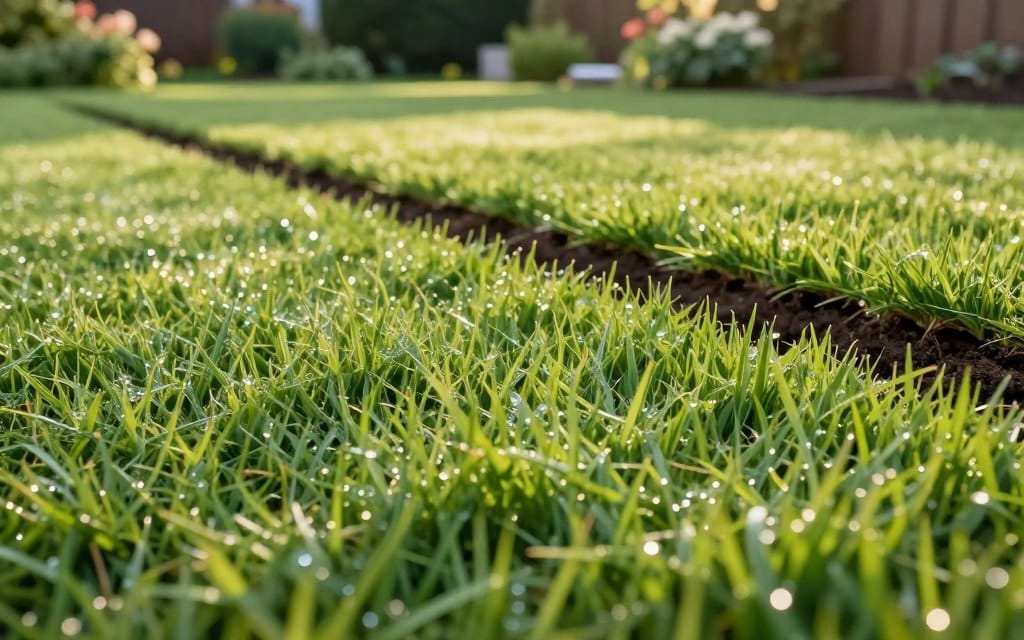
Your fresh grass arrives with its own soil and roots, but it’s in a vulnerable state after being harvested and moved. This living carpet is under significant stress from being cut and transplanted onto a new surface.
Quality declines fast after cutting. You must ensure laying sod happens within 48 hours. Leaving rolls in the sun causes rapid dehydration.
The roots need time to bond with your native soil. This process can take two to six weeks. Proper moisture is critical because the grass lacks deep roots to find water.
After about two weeks, gently tug a corner. If it resists, the sod roots are making contact. Watch the blade color and texture for early signs of successful growth.
The goal for the first month is simple. Provide a stable environment for the turf to transition into a permanent part of your yard.
Sod Installation: Critical Aftercare Steps
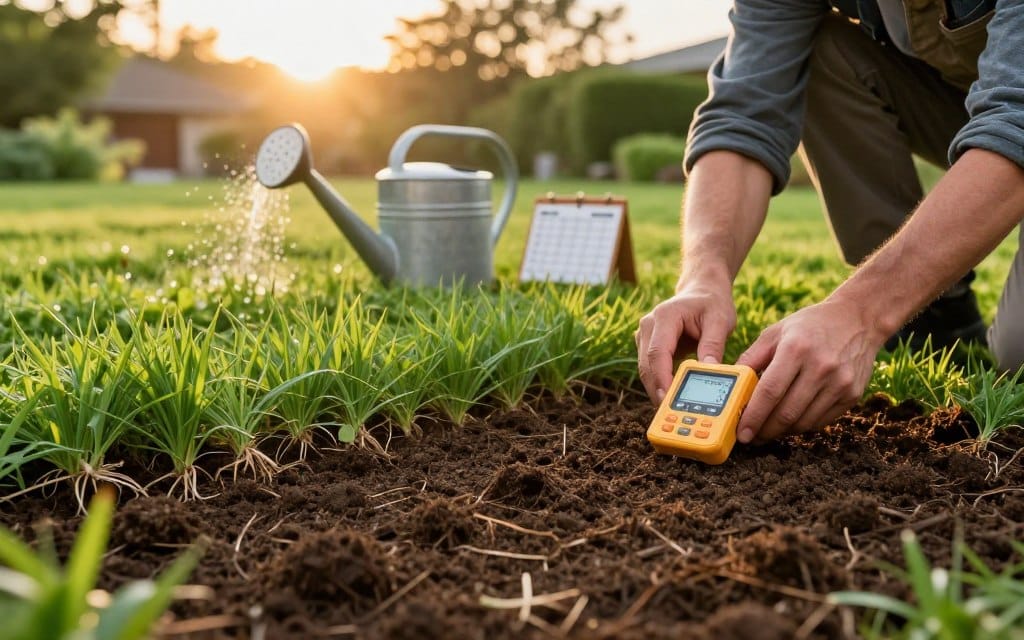
Successfully transitioning your yard from bare soil to lush turf hinges on the steps taken immediately after the crew finishes. This initial period is vital for root growth and soil contact.
Start with a perfectly prepared base. Remove all old vegetation and debris. Use a garden rake to loosen the top few inches of earth.
This breaks up compacted clumps. Ensure the final grade sits one inch below paved surfaces. Your new grass will then lay flush with walkways and patios.
Lay rolls in a staggered, brick-like pattern. Press each piece firmly against its neighbor. This prevents air gaps and uneven seams.
Always stand on bare ground while working. Your weight can shift the fresh turf. Use a lawn roller to press out remaining air pockets.
| Critical Step | Primary Purpose | Optimal Timing |
|---|---|---|
| Soil Preparation & Grading | Create a loose, level surface for root penetration | Before laying the first roll |
| Rolling the Area | Eliminate air pockets and ensure root-to-soil contact | Immediately after the sod installation |
| Trimming the Edges | Prevent drying and give a clean, professional finish | During the final placement |
| Initial Deep Watering | Provide essential moisture to kickstart growth | Within the first hour after completion |
For sloped areas, place rolls across the incline. This simple technique improves water retention. It also helps prevent soil erosion.
Trim the perimeter with a sharp knife for crisp edges. Remember, the quality of your soil preparation directly controls how fast the turf establishes. Good groundwork leads to rapid, healthy growth.
Watering Strategies for Optimal Sod Establishment

Your newly placed lawn’s ability to thrive is directly tied to how you manage moisture in the critical first weeks. A disciplined watering schedule is the most important step you will take.
For the initial 10 to 14 days, provide water twice daily. This keeps the soil profile consistently damp to support new root growth. The goal is to prevent the delicate roots from drying out before they bond.
Check moisture by gently lifting a corner of the grass. The earth underneath should feel moist, not soggy. Morning and late afternoon are the best times for this task.
Avoid skipping a day, as even brief drought can cause browning edges. Dry or lifting sections signal an urgent need for more water. Use an oscillating sprinkler for even coverage across the entire area.
After about two weeks, you can reduce the frequency. Start watering less often but more deeply. This shift encourages the roots to grow downward into the native soil for long-term health.
Proper irrigation is the primary way to feed your lawn the nutrients and care it needs. It ensures your yard develops into a vibrant, green landscape.
Enhancing Soil Health and Nutrient Balance
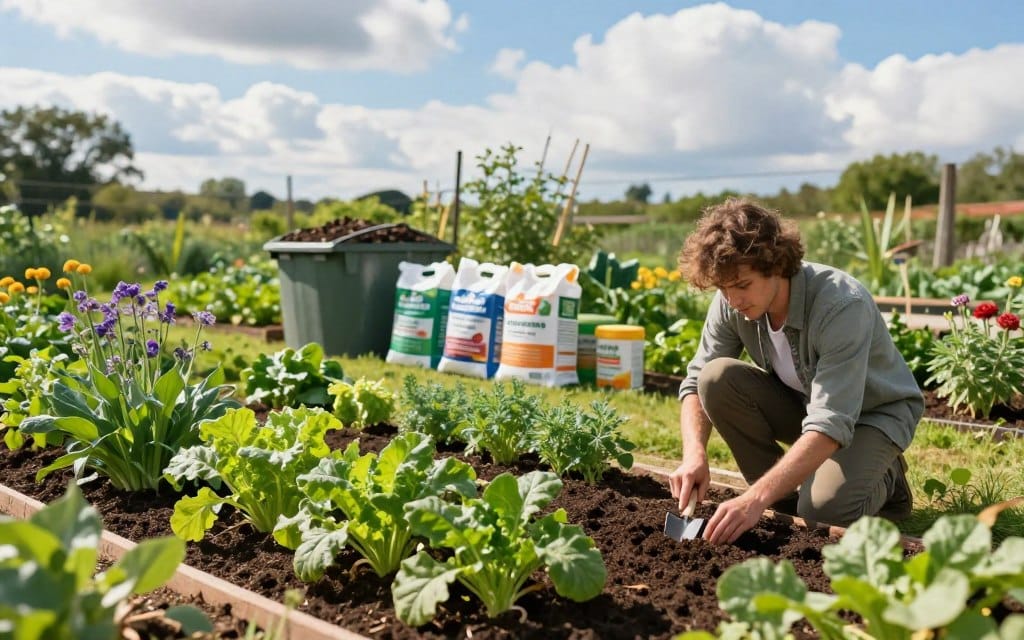
Feeding your new grass too soon can do more harm than good, making timing the most critical factor in fertilization. Hold off on any fertilizer for the first 30 to 60 days. The young roots need time to anchor firmly into the earth.
Applying nutrients early can wash away or even burn the delicate root system. Once the turf is firmly established, you can start a regular feeding program. Choose a product with higher phosphorus to encourage strong root development.
Mixing organic compost into the soil before laying turf provides a slow-release nutrient source. This creates a healthy foundation for thick growth. A robust lawn naturally resists weeds and environmental stress.
Conduct a soil test if you are unsure about your yard’s nutrient levels. This data guides your future fertilization strategy. Always follow the product label to avoid over-application.
By waiting for the roots to set, you ensure every nutrient is used for growth. This patience builds a resilient and vibrant landscape.
Minimizing Foot Traffic and Environmental Stress
Your new turf’s fragile root system needs a quiet, undisturbed environment to properly knit with the soil below. This bond is easily broken by pressure during the first critical weeks.
Stay completely off the grass for a full month. Foot traffic can shift the pieces, creating ugly gaps and an uneven surface. Designate clear paths and use temporary barriers to keep pets and kids away from the area.
If you must walk on it, step lightly. Distribute your weight evenly and avoid sharp turns. Pivoting on a single foot can tear the delicate blades and disrupt the roots.
Environmental stress like heat or wind also threatens new growth. Consistent moisture is your best defense. A damp soil profile helps the grass stay cool and resilient.
Protecting your yard from physical harm is a core part of early lawn care. This patience allows for deep, strong root development. Your reward is a durable and vibrant green space.
Preventing Weeds and Maintaining Crisp Edges
Crisp borders do more than just look good. They are a functional part of a healthy turf system that retains water and blocks weeds.
The perimeter of your lawn is where moisture escapes fastest. A simple mound of soil along the edges seals this critical zone.
Use a heavy garden rake to press soil against the leaf blades. This contact prevents the grass from drying out and browning before the roots establish.
Weeds seek any gap to invade. Ensure all rolls are fitted tightly together during the initial project. A dense stand of grass is your best natural defense.
Inspect the edges weekly for signs of lifting or drying. Address these spots quickly to protect the entire yard.
A sharp sod knife creates perfect fits against sidewalks and driveways. Neat trimming helps the grass retain moisture more effectively.
If you spot a weed, pull it by hand with care. Avoid disturbing the shallow roots of your new grass. Consistent edge maintenance is a hallmark of professional lawn care.
These steps ensure your green lawn remains vibrant and healthy from the center to every crisp border.
On-Going Lawn Care Tips for a Vibrant Green Lawn
A lush, green lawn is a living investment that requires a shift from initial establishment care to a thoughtful, long-term maintenance routine. Your focus moves from survival to promoting sustained health and beauty.
Your first mow is a major milestone. Wait until the grass reaches 3 to 4 inches in height. Never remove more than one-third of the blade length in a single session. Cutting too much can shock the plant and slow its growth.
As seasons change, so should your care. Incorporate core aeration yearly to prevent soil compaction. This allows air, water, and nutrients to reach the root zone. Also, keep adjusting your watering schedule based on rainfall and temperature.
Keep mower blades sharp for a clean cut that heals fast. For thin areas, periodic overseeding helps maintain a thick turf. In shady spots, consider a shade-tolerant grass mix for even growth.
Leave a thin layer of fine clippings on the yard. They return valuable nutrients to the soil. Consistent attention to these details ensures your beautiful green space provides value for years.
Conclusion
A vibrant yard is not just planted; it is nurtured through a series of critical, timely actions. The initial sod installation service provides the canvas, but your follow-up care paints the final picture. Diligent attention to water, soil health, and protection allows the grass to establish strong roots.
The first few weeks are paramount for long-term success. Consistent moisture and keeping foot traffic off the area give the turf time to bond firmly with the earth beneath. This period of careful management builds a durable foundation.
Your reward is a beautiful, functional lawn that enhances your home’s value. For the best results, always consult local experts about grass varieties suited to your regional climate. With the right post-care plan, your landscape will thrive for many years.