What if the very ground around your home is silently threatening its foundation? Many homeowners don’t realize how crucial proper water management is until it’s too late. Without a good plan, excess moisture can cause serious problems. It leads to soil erosion, damage to your home’s structure, and can even kill your plants. Standing water doesn’t just look bad. It creates foul smells and becomes a perfect breeding spot for mosquitoes and other pests. This turns your beautiful outdoor space into a nuisance. Implementing effective yard drainage solutions is the key to stopping these issues. It protects your property’s value and keeps your landscape healthy.
A well-designed system handles rain and runoff smoothly. This prevents flooding in your garden and basement, saving you from costly repairs. This guide will show you how to manage water flow correctly. You’ll learn to safeguard your home and enhance its curb appeal for years to come.
Understanding Drainage Systems in Landscaping
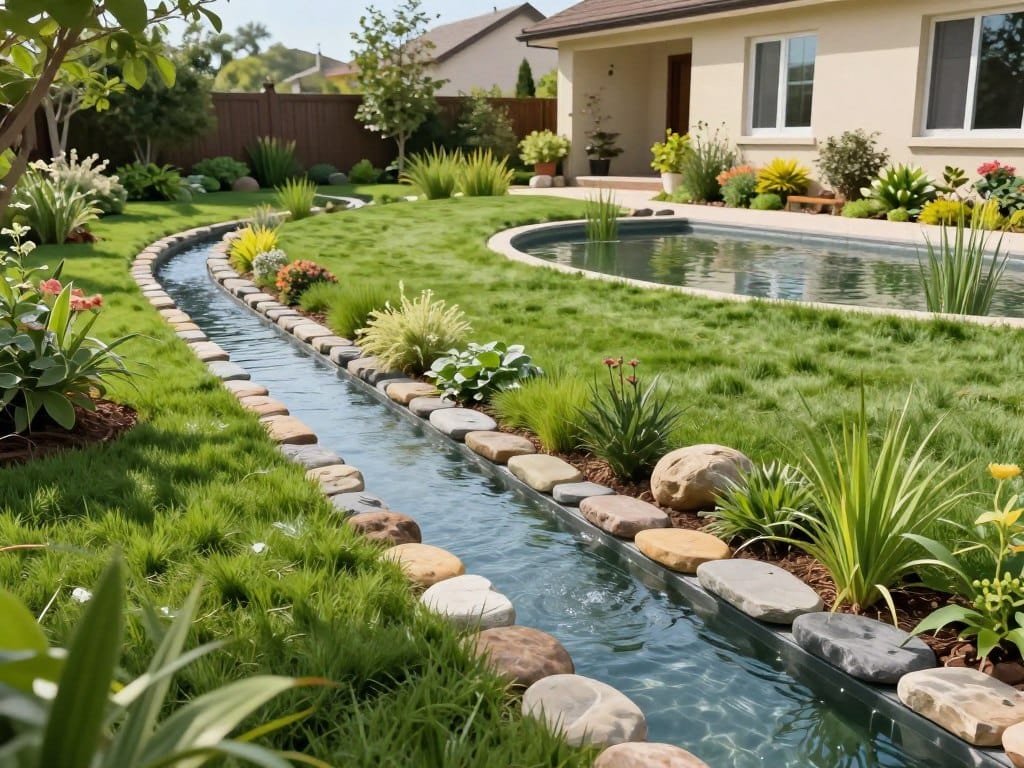
In regions with heavy rainfall, like Alpharetta, a functional water management plan is non-negotiable. These systems are designed to handle the intense flow from seasonal storms and daily irrigation.
The Purpose of a Drainage System
The primary role of any drainage system is to collect runoff and guide it away from your home’s structure. Alpharetta receives about 50 inches of rain annually, making this redirection vital. Components like dry wells or rain barrels safely store or disperse this excess moisture. This prevents it from pooling, where it can cause harm.
How Proper Drainage Protects Your Property
Moving water away shields your home’s foundation from pressure and cracks. It also stops valuable topsoil from washing away during a downpour.
Effective flow control eliminates standing pools that attract mosquitoes. This protects your family’s health and your landscaping investment. A good plan safeguards your basement and keeps your outdoor space beautiful and usable.
Identifying Common Yard Drainage Problems
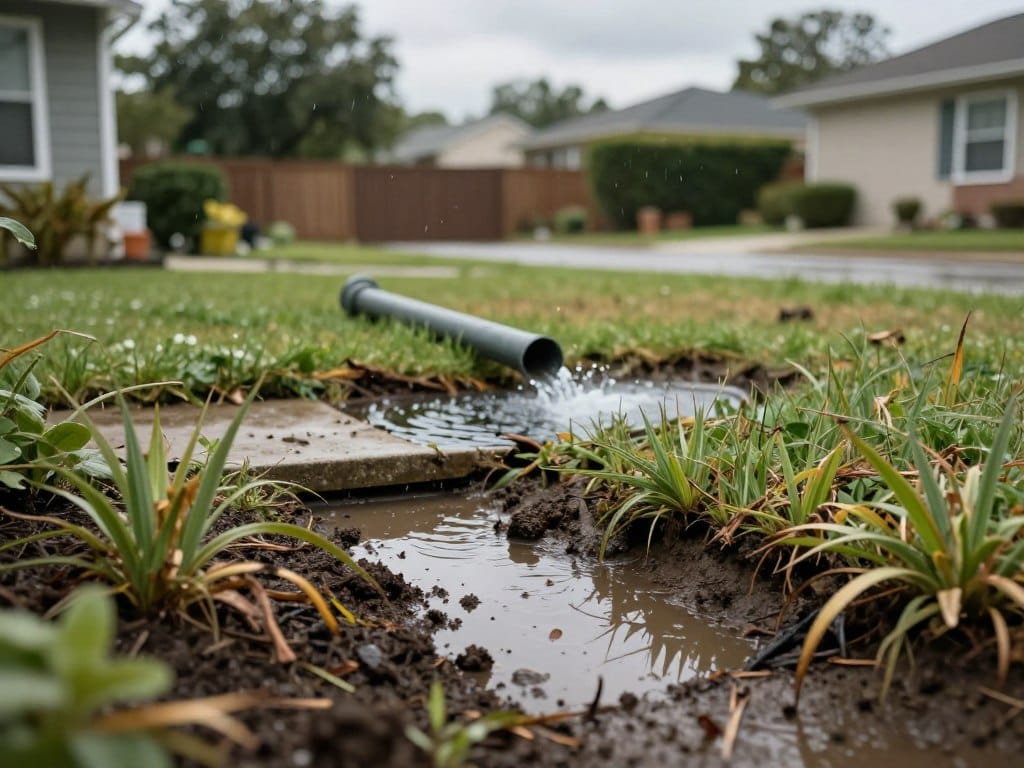
Recognizing the symptoms of faulty water flow is the first step toward a healthy property. Early detection helps you avoid costly structural repairs and keeps your landscape vibrant.
Signs of Poor Drainage and Standing Water
Large puddles that linger for days are a clear red flag. This persistent moisture often kills grass, creating unsightly brown patches. You might also notice exposed tree roots or soggy soil that never seems to dry. These conditions invite pests and can lead to unpleasant odors around your home.
Factors Leading to Erosion and Water Damage
An improper slope is a major culprit. The ground should drop 2 to 3 inches for every 10 feet away from your house. Without this grade, water pools and exerts pressure on your foundation. Compacted soil from construction also prevents proper absorption. This leads to topsoil washing away, which further harms your plants. Addressing these factors quickly protects your investment.
Practical Yard Drainage Solutions to Enhance Your Landscape
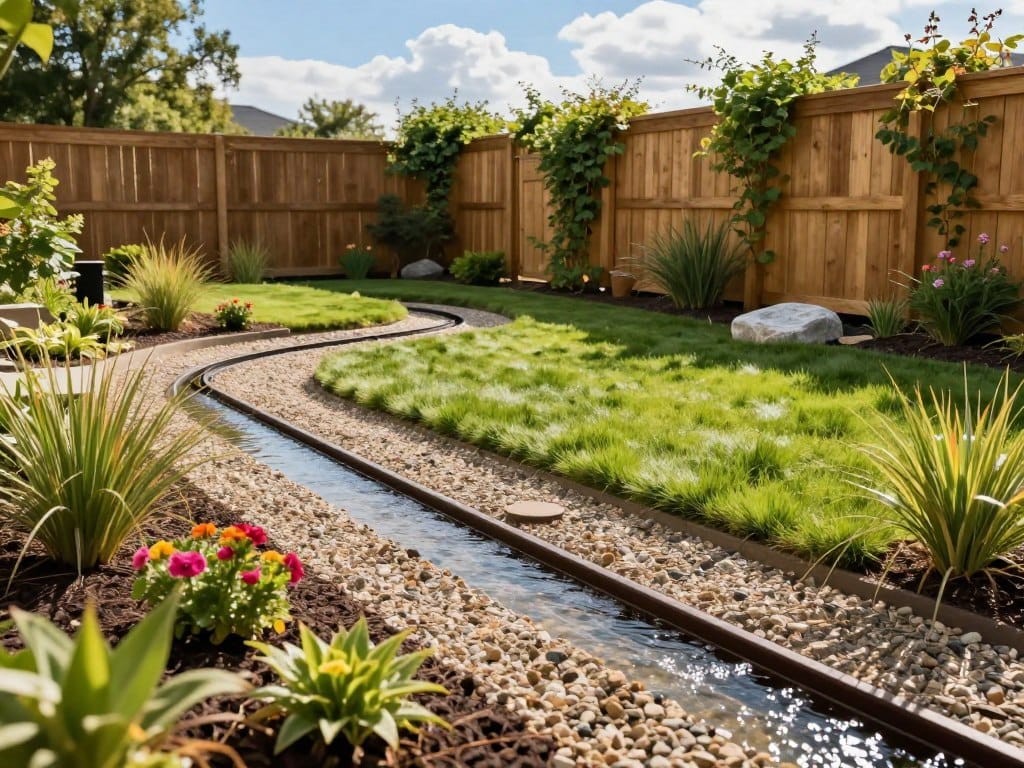
The secret to a resilient outdoor area lies in working with nature’s own flow patterns. Instead of resisting water, a good plan guides it safely away from your home and garden.
Key Concepts Behind Effective Drainage
Start by studying the natural slopes and low points on your property. This analysis shows where moisture collects and how to redirect it.
Choosing the right drainage solution depends on your local soil type and weather patterns. Clay ground needs different handling than sandy soil to prevent pooling.
Integrate functional elements like channels or basins into your garden design. These features can look attractive while managing runoff efficiently.
The core idea is to slow the movement of water across the land. This allows more time for it to soak into the earth or reach a designated outlet.
Consider how your water management system affects existing plants and lawn health. Proper flow keeps roots from rotting and soil from washing away.
A thoughtful approach ensures your outdoor space stays beautiful and usable after any storm. It protects your investment and enhances your landscape’s value.
Exploring Various Drainage Techniques
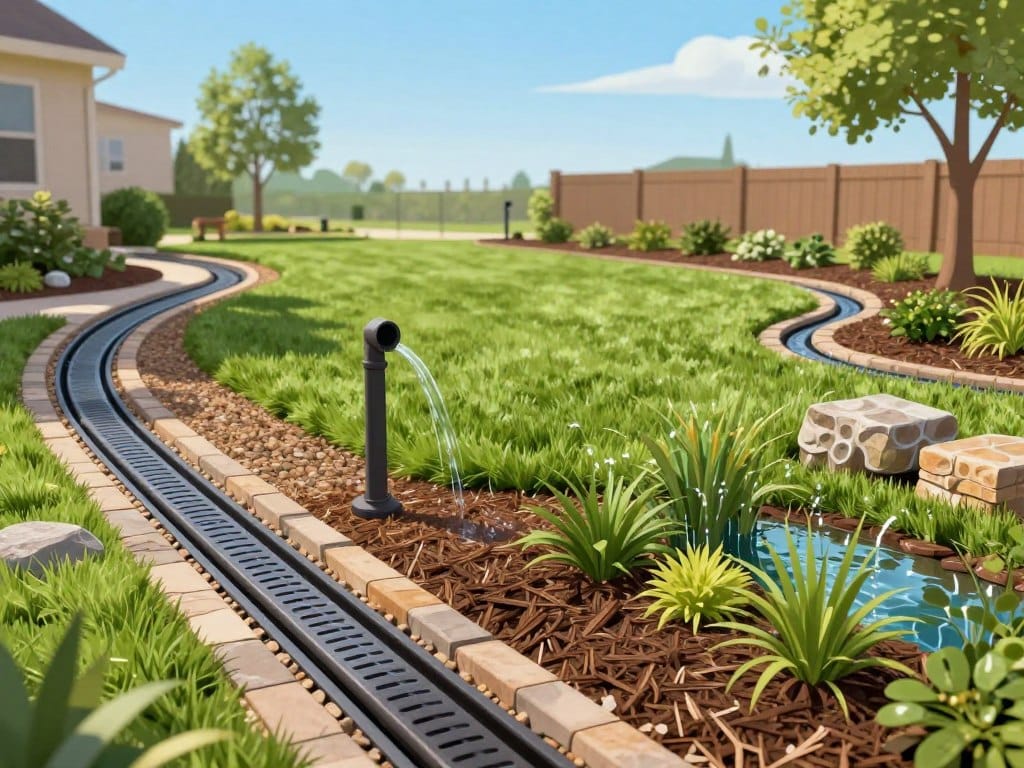
Choosing the right technique for managing runoff can transform a problematic area into a functional landscape feature. Several methods exist, each suited to different soil types and flow patterns.
Benefits of French Drains
A French drain is a versatile system. It uses a perforated pipe buried in gravel to collect excess moisture.
This network channels runoff to a single point, like a storm drain or ditch. It effectively relieves pressure on foundations and prevents soil saturation.
Dry Creek Beds, Dry Ponds, and Swales
A dry creek bed mimics a natural stream. It should have a gradual slope of about one inch for every ten feet to ensure proper flow.
Dry ponds collect and store water in low-lying areas, allowing slow seepage into the ground. Swales are shallow, vegetated ditches that slow down water and filter pollutants.
Combining these approaches creates a comprehensive system for handling moisture across your property.
Implementing DIY Drainage Improvements
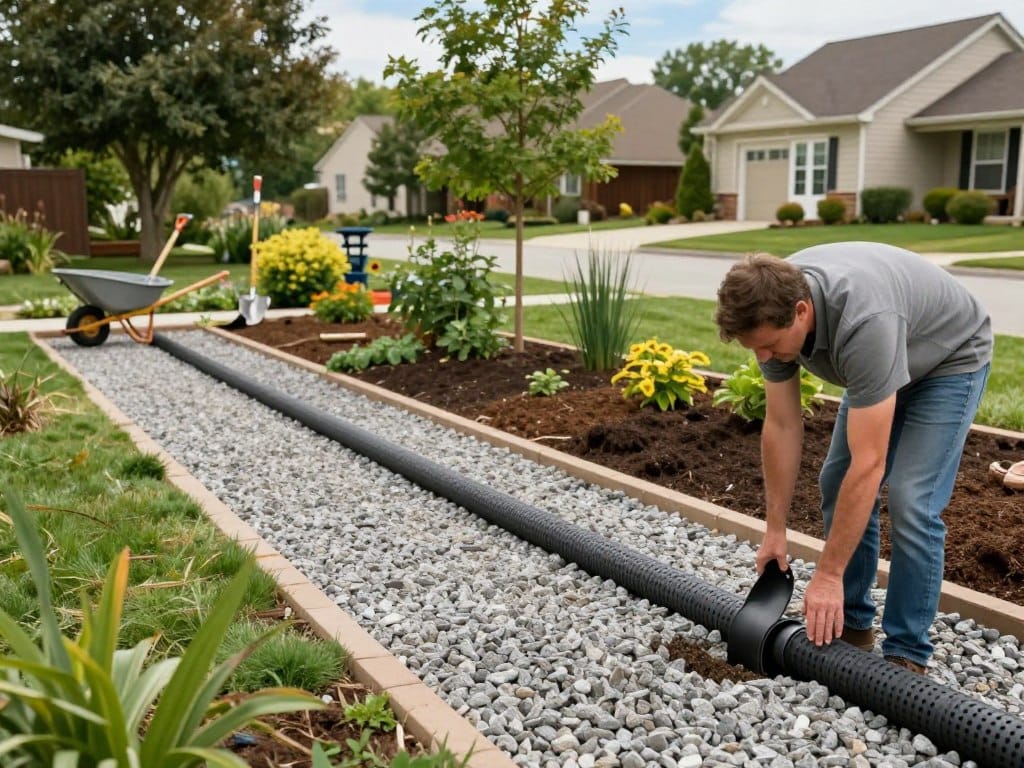
Taking control of water flow around your property doesn’t always require a professional. With careful planning, you can install effective systems yourself.
These projects protect your home and enhance your landscape. They guide moisture away from critical areas.
Step-by-Step Installation Tips
Begin by calling 811 to locate underground utilities. This prevents dangerous accidents during your excavation.
For a French drain, dig a trench about 18 inches wide and 24 inches deep. Keep the drain at least 10 feet from your home’s foundation.
Maintain a consistent slope of one inch per ten feet for the pipe. This ensures proper water movement away from the structure.
Line the trench with landscaping fabric to stop clogs. Add a layer of gravel before placing the perforated pipe.
Fill the trench with more gravel, then topsoil. This completes your core drainage project.
Simple Fixes for Gutter and Soil Issues
Often, water problems start at the roof. Extend your downspout several feet from the house.
This simple step prevents pooling near exterior walls. It’s a quick and impactful improvement.
Check for soil compaction in low areas. Aerating the ground helps moisture absorb faster.
These minor adjustments can solve major flow issues. They are perfect first steps for any homeowner.
Designing a Sustainable Drainage System
The most effective long-term strategy for handling runoff combines living vegetation with strategic earthworks. This integrated approach protects your property while supporting a healthy, vibrant landscape. A well-designed system works with nature, not against it.
Incorporating Plantings for Natural Absorption
Native plants with deep root systems are nature’s sponges. They drink up excess moisture and stabilize the earth to prevent erosion. These plants thrive in local conditions with minimal care.
Consider creating a rain garden in low-lying areas. For plant health, design it to drain completely within 24 hours after heavy rain. This prevents root rot and stops mosquitoes from breeding.
Utilizing Berms, Grading, and Swales
Proper grading is fundamental for foundation protection. The ground should slope away, keeping at least four inches of concrete visible above soil level. This simple step prevents moisture from seeping into your home’s structure.
Berms act as natural barriers to redirect water flow away from vulnerable spots. A vegetated swale slows runoff and filters it through plants before absorption. This sustainable drainage system reduces maintenance and supports plant growth year-round.
Innovative Approaches to Modern Drainage
Today’s property owners have access to innovative systems that blend high performance with subtle design. These modern methods go beyond basic pipes and ditches to offer smarter water control.
New Materials and Techniques
A key advancement is the use of advanced corrugated pipe materials. These are engineered for long-term durability and resistance to environmental degradation from moisture and soil.
New installation techniques allow these components to be integrated nearly invisibly. This maintains your landscape’s aesthetic appeal while managing flow effectively.
Homeowners now favor these advanced materials for their superior flow rates and simpler installation. Modular designs can be customized to fit any property’s unique layout and water management needs.
Utilizing these innovative approaches ensures a reliable system that requires minimal upkeep for years. It provides consistent protection against the risks of poor water control on your land.
Planning and Budgeting Your Drainage Project
Transforming a wet problem area into a dry asset requires upfront planning and financial foresight. A clear roadmap prevents wasted effort and ensures your water management system works correctly from day one.
Start by sketching your property’s layout and marking low spots. This visual plan helps you estimate the scale of your project and the materials needed.
Essential Tools and Materials Overview
Gather essential tools like a sturdy shovel, a mattock for tough soil, and a water level. These items help you achieve the correct slope for your pipes.
Your material list should include corrugated pipe, plenty of gravel, and a catch basin. Remember, a 2% slope is critical for flow. This means a one-foot drop for every fifty feet of pipe length.
Drill small holes in the bottom corners of your catch basin. This simple step stops water from pooling inside it after a storm.
Cost-effective DIY Solutions
Improving your lawn doesn’t have to be expensive. Mixing sand and compost into dense soil is a budget-friendly way to boost absorption.
Always check your downspout extensions. Make sure they direct flow away from your home and not toward a neighbor’s property.
After installing your pipe, cover the outlet end with hardware cloth. This keeps small animals from making a home inside your drain line.
Choose the right type of gravel and rocks. They create a functional feature that also makes your outdoor space more attractive.
Conclusion
Proactive water control is the cornerstone of preserving your property’s integrity and landscape vitality. Implementing the right plan safeguards your investment from long-term moisture damage.
Understanding how to manage flow empowers you to make smart choices. Whether a simple fix or a full installation, acting early saves significant time and money.
A well-executed drainage solution keeps your space dry and free from pests. Use the techniques outlined here to confidently plan your first step toward a healthier, more resilient outdoor area.