5 Warning Signs of Poor Yard Drainage (And How to Fix Them Step-by-Step)
At a Glance: Yard drainage protects your home, foundation, lawn, and landscaping by moving excess water away from low spots. Standing water that lasts beyond 24–48 hours after rain signals a problem. This guide covers five warning signs and practical fixes, from simple upkeep to professional design and excavation.
“An ounce of prevention is worth a pound of cure.” — Benjamin Franklin
Water should normally leave a low area within one to two days after rainfall. If it lingers, inspect the slope and soil. Proper grading should guide water away from the home at about 1 inch per foot.
The five key warning signs include lasting pools, erosion and mud, damaged plants, basement moisture, and foundation symptoms. These issues can lead to mold, wood rot, flooding, and costly repairs.
This guide explains step-by-step solutions, including downspout extensions, French drains, catch basins, trench drains, dry creek beds, and lawn aeration. Some tasks need basic maintenance. Others require a designed system or professional excavation. Early action helps protect your property and keeps one small solution from becoming a major repair.
Key Takeaways
- Water that remains for more than 24–48 hours needs investigation.
- A proper slope moves rain away from the home.
- Watch for erosion, plant damage, basement moisture, and cracks.
- Downspout extensions and aeration may solve minor problems.
- French drains and catch basins often address persistent flow.
- Complex excavation may require a qualified professional.
Understanding Yard Drainage and Why It Matters
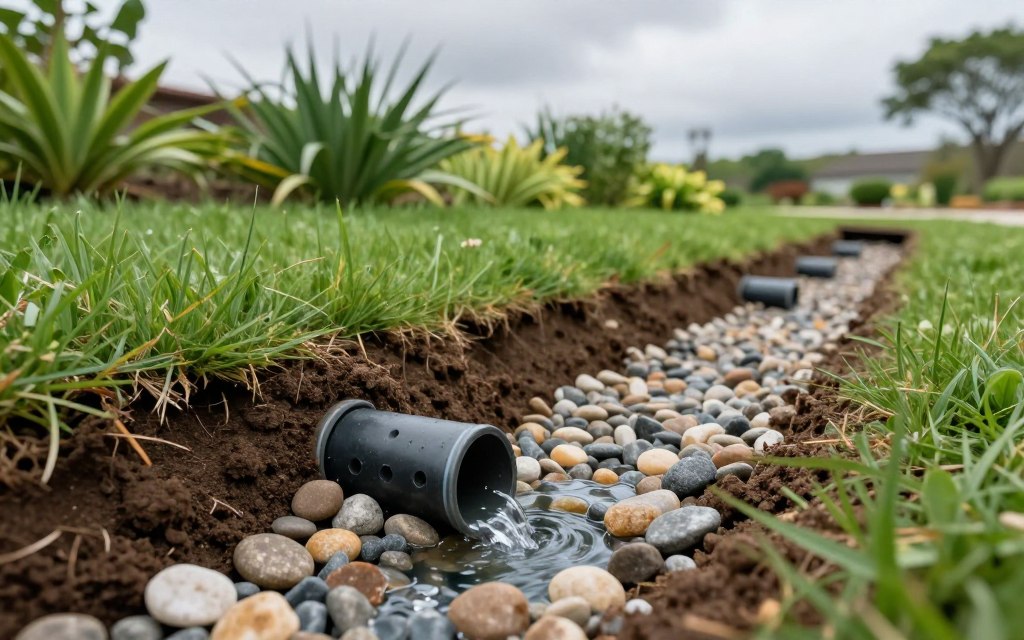
Water follows gravity, low points, cracks, and soft patches. Settling soil, erosion, new landscaping, or compacted ground can redirect surface runoff toward a home. A quick review of grading can reveal where the natural flow changes.
Clay-heavy soil absorbs water slowly and stays saturated after storms. Sandy soil drains faster, yet it may form uneven channels. Permeable surfaces, such as gravel, can improve infiltration when the landscape has enough space.
How Water Moves Across Soil, Slopes, and Landscaping
A slope of about 1 inch per foot moves water away from foundation walls. That equals roughly 6 inches across 10 feet. Good grading supports a healthier landscape and reduces stress on the property.
How Excess Moisture Threatens Foundations and Plants
Soil saturation increases hydrostatic pressure against foundation walls. Moisture can enter basements or crawl spaces and reach electrical equipment, HVAC parts, and stored materials. It may also cause cracks, mold, wood rot, and unpleasant odors.
Plants can suffer from root rot, insects, and weak growth. For a deeper review, explore these drainage solutions.
| Method | Purpose | Typical Location |
|---|---|---|
| Grading | Redirects flow | Near the home |
| French drain | Collects subsurface moisture | Wet borders |
| Surface drain | Captures pools | Low spots |
| Channel drain | Handles runoff | Driveways |
| Swale | Guides flow | Landscape edges |
| Dry creek bed | Controls heavy flow | Sloped areas |
Warning Signs Your Yard Has Drainage Problems
A healthy landscape dries gradually after rain, while trouble leaves clear clues. Check these five signs before choosing a repair:
- Standing water lasts beyond 24–48 hours.
- Soft lawn patches return after moderate storms.
- Erosion removes soil near paths or garden beds.
- Dead plants, mud, or foul odors spread.
- Basement moisture or foundation stains appear.
Standing Water and Persistently Wet Lawn Areas
Recurring puddles, spongy grass, and wet spots point to poor drainage. Wet ground can attract insects, including termites, and weaken soil near the foundation. Photograph each area after rain, then record how long the water remains.
Erosion, Mud, and Damaged Landscaping
Look along walkways, driveways, and garden beds for exposed roots or channels. Erosion shows that concentrated runoff is carrying soil away and destabilizing landscaping. Mud, root damage, dead grass, and plant loss also signal excess moisture.
Basement Moisture, Mold, and Foundation Warning Signs
Musty odors, mold, wood rot, floor damage, and flooding require prompt attention. White, chalky efflorescence on masonry suggests water movement near the foundation. Inspect whether gutters discharge against the home, since roof runoff can worsen existing problems.
How to Find the Source of Yard Drainage Issues

Start with observation before buying materials or planning a new system. A careful check can reveal where water enters, gathers, and leaves your property. Record findings during rain and again after the ground begins to dry.
Inspecting Gutters, Downspouts, and Surface Runoff
Begin at the roof, then follow the flow across the property. Look for these details:
- Watch whether gutters carry water fully into each downspout. The outlet should release it 4–6 feet from the foundation.
- Check gutters for leaves, sediment, poor pitch, overflow, and missing sections. These defects can place concentrated water beside the home.
- Walk low areas during rainfall. Note whether runoff moves toward a driveway, basement wall, garden bed, boundary, or catch basin.
- Mark changes with stakes, biodegradable paint, or photos. Compacted soil often redirects surface flow.
- Inspect each drain grate and outlet for sediment, roots, crushed pipes, or a discharge point that ends in another wet area.
This process helps separate minor drainage problems from deeper pipe issues. For routine lawn care that supports better soil absorption, consider professional lawn maintenance.
Step-by-Step Yard Drainage Solutions for Homeowners
Small changes can redirect runoff before it harms your home or property. Work from the surface down, and test each solution after rain.
Correcting Yard Grading and Compact Soil
- Add clean topsoil so the ground falls about 6 inches over the first 10 feet from the home.
- Aerate compact soil, then reseed damaged lawn areas after they dry.
- Keep mulch from hiding low spots or erosion.
Extending Downspouts and Managing Roof Runoff
Attach splash blocks or extensions to each downspout. Release roof water 4–6 feet from the foundation and away from saturated areas. Check local rules before adding a rain barrel.
Using French Drains, Catch Basins, and Trench Drains
A French drain uses mesh fabric, gravel, and perforated PVC to move subsurface water away. Installation often costs $1,000–$6,000 or more. A catch basin suits a low point, while a trench drain fits driveways and patios.
| Option | Best use | Upkeep |
|---|---|---|
| Grading | Surface flow | Check settling |
| Downspout extension | Roof runoff | Clear debris |
| French drain | Wet soil | Inspect outlet |
| Catch or trench drain | Hardscape flow | Clean grates |
LandScape Drains offers T304 and T316 stainless-steel trench options, catch basins with strainer baskets, and Slot Drain models rated up to 27 GPM. Hire a contractor for excavation, basement entry, or persistent flooding.
Landscape-Friendly Drainage Systems for Persistent Water
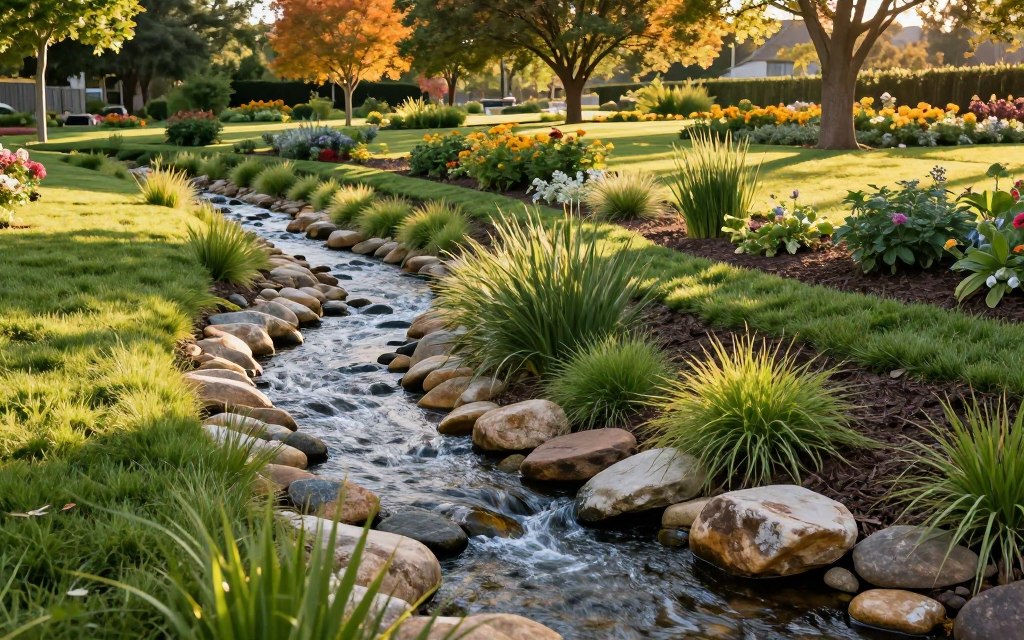
A rain-ready landscape can solve wet spots without looking engineered. Natural features can guide runoff, reduce erosion, and protect your home while adding visual interest.
Choose a solution that matches the slope, soil, and available outlet. A shallow swale or dry creek may suit a broad area, while a dry well can store water below ground. Review local rules before changing grading or directing flow near a property line.
Building Dry Creek Beds, Swales, and Dry Wells
Build a dry creek with large stones on the sides, smaller gravel in the center, and a defined outlet. Direct water toward a swale, catch basin, or approved edge rather than garden beds. A dry creek also supports xeriscaping when it stays dry.
Across a flat or gentle slope, a shallow swale can manage sheet flow. A dry well uses an underground, rock-filled basin to collect runoff and let it disperse through nearby ground. These systems work best after grading confirms a safe flow path. A local water-management guide can help with planning.
Choosing Gravel, Permeable Surfaces, and Lawn Aeration
Replace selected concrete or asphalt with pea gravel where access needs allow. Aerate compacted lawn areas, then add suitable soil amendments and plants that tolerate moisture. Keep roots and mulch clear of the intended channel. For broader landscape solutions, consider a professional review.
| Feature | Best use | Key benefit |
|---|---|---|
| Dry creek | Sloped areas | Controls flow and adds style |
| Swale | Flat lawns | Manages sheet runoff |
| Dry well | Limited surface space | Stores water below ground |
| Gravel and aeration | Compacted areas | Improves infiltration |
Common Yard Drainage Mistakes to Avoid
Many runoff failures begin with a poor plan, not a lack of materials. Find the source and outlet before starting any project.
Common Mistakes:
- Installing a drain without a safe destination can move water into another low area and repeat the problem.
- Check asphalt, concrete, and soil slopes. An improper grade may send runoff toward the home and its foundation.
- Keep downspout outlets several feet away from basement walls. Concentrated flow can cause standing moisture and structural damage.
- Do not hide clogged grates, compacted soil, or a saturated lawn beneath decorative materials. Fix the source first.
- Clear surface drains each season, especially after fall leaves collect. Arrange a professional inspection of buried systems every few years.
- Seek expert help when water enters the basement, flooding returns during moderate rain, or erosion threatens the landscape and property.
Each solution must match the site, soil, and type of flow. Review professional water-management guidance before complex work. For design support, explore irrigation services.
Conclusion
Who should install a drainage system when water enters a basement? A qualified contractor should inspect the site when water enters a basement, flooding returns, or erosion nears the foundation. Professionals trace sources, assess soil, and design a safe system.
What is the most effective way to drain a waterlogged yard? Regrading and surface drains often correct shallow pooling. If saturated soil continues moving below the surface, a French drain with gravel, perforated pipe, and a suitable outlet offers reliable control.
How far should a downspout discharge water from the home? Place downspout outlets at least 4–6 feet from the home’s foundation. Use extensions or splash blocks, and choose buried pipes when open discharge could erode soil or redirect runoff.
Why does standing water remain in a yard after rain? Standing water may reflect poor slope, compacted or clay soil, blocked gutters, clogged drains, limited outlets, or a shallow depression. Testing flow after rain helps identify the correct repair.