What Is an Outdoor Living Space? Benefits & Top Layouts
Have you ever wondered what is an outdoor living space and how it can transform your backyard into a cozy retreat?** A well-designed outdoor living space serves as an intentional extension of your home, creating the perfect place to relax, entertain guests, dine outdoors, and enjoy nature. It turns an ordinary yard into a functional, inviting space that enhances your lifestyle and adds lasting value to your property.
Unlike a simple yard, this area features designated zones for seating, cooking, and entertaining, much like the rooms inside your home. From a small patio with a bistro set to a grand deck complete with an outdoor kitchen, any backyard can become a delightful living area.
The modern trend in outdoor design has evolved significantly. Today’s spaces rival indoor rooms in comfort and style, making them perfect for year-round use. This guide will explore the defining characteristics, benefits, and essential components of these spaces, helping you create a functional and inviting area that enhances your home.

Key Takeaways
- Outdoor areas can enhance relaxation and social interaction.
- Designated zones make these spaces functional and inviting.
- Any backyard, regardless of size, can be transformed.
- Modern designs offer comfort comparable to indoor rooms.
- Creating such spaces increases usable square footage without major renovations.
Understanding What Is an Outdoor Living Space
Transforming your backyard into a stylish retreat can enhance your home’s appeal. A well-designed outdoor area serves as a functional extension of your interior, creating defined zones for various activities like dining, lounging, and cooking.
The main difference between a yard and a true outdoor living area lies in the intentional integration of hardscaping, furniture, lighting, and shelter elements. These features make the space inviting and usable throughout the year.
Defining Outdoor Living Spaces
An outdoor living space is a carefully crafted exterior area designed to function as an extension of the home. This area includes specific zones for activities, allowing for a seamless flow between indoor and outdoor environments.
Common Types: Patios, Decks, Gazebos, and More
Patios are typically ground-level paved areas directly adjacent to the home. They are perfect for flat backyards and can be made from various materials, including concrete, bricks, pavers, or flagstones.
Decks, on the other hand, provide elevated platforms ideal for sloped or uneven terrain. Traditionally built from pressure-treated wood, they now often feature composite lumber made from recycled materials, offering low-maintenance options.
Gazebos are freestanding, roofed structures that create a distinct outdoor room. They serve as focal points within a larger outdoor living area, providing shade and shelter.
Essential Elements: Seating, Lighting, and Structures
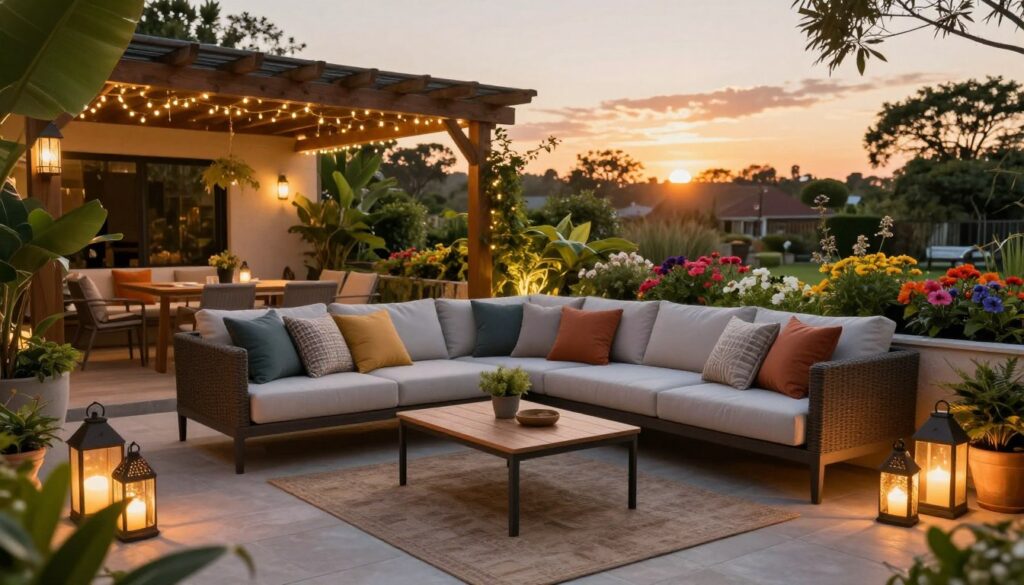
To create a functional outdoor living space, essential elements like seating, lighting, and structures must be considered. Comfortable seating allows for relaxation and social interaction, while proper lighting enhances ambience and safety.
Structures such as pergolas not only provide shade but also add architectural interest. Combining these elements effectively transforms any backyard into a space that can be enjoyed day and night.
Successful outdoor living areas often layer multiple types—such as a patio for dining, a deck for lounging, and a gazebo for shaded relaxation—to create a cohesive design. Understanding these foundational types and elements is the first step in planning an outdoor living space that complements your family’s lifestyle and architectural style.

For more insights on enhancing your outdoor living area, check out this resource.
Key Benefits of Creating an Outdoor Living Space
Envision a welcoming area that invites family members to step outside and share meaningful experiences. This transformation not only enhances your home but also fosters connections among loved ones. Here are some key benefits of designing such a space:
Enhancing Family Connection and Social Gatherings
Having a dedicated outdoor area naturally draws family members outside. It creates a shared environment where connection happens organically. Meals, conversations, and leisure time become special moments in this inviting setting.
Moreover, the space serves as an ideal venue for entertaining guests. From casual weekend barbecues to milestone celebrations, flexible seating arrangements adapt to gatherings of any size. This adaptability makes it a perfect place for social interactions.
Increasing Home Value and Usable Living Area
Investing in an outdoor living area significantly boosts your home’s value. This addition increases usable living space without the expense of a full-scale renovation. Real estate professionals often highlight well-designed outdoor areas as desirable features that set homes apart in competitive markets.
In fact, a well-constructed outdoor kitchen can further elevate your property’s appeal. Simple setups with propane grills or more elaborate designs with electrical and water lines can make a substantial difference in resale value.
Promoting Health, Relaxation, and Wellbeing
Spending time outdoors has numerous health benefits. Fresh air and natural sunlight provide essential vitamin D, while being surrounded by plants reduces stress. An outdoor living area becomes a dedicated place for relaxation and mindfulness.
Imagine enjoying quiet morning coffee on a patio or unwinding by a fire feature in the evening. This versatility allows the space to serve multiple purposes—a dining area, a lounge, a play zone, and a retreat—all within one thoughtfully designed backyard.
In conclusion, the combination of social, financial, and health benefits makes creating an outdoor living area one of the most impactful home improvements a homeowner can undertake.

Core Components of Successful Outdoor Living Spaces
Creating a successful outdoor area involves selecting the right components that blend functionality with style. The following elements are essential for crafting an inviting and practical environment.
Patios and Decks: Materials and Layout Options
Choosing the right materials for patios and decks is crucial. Concrete offers affordability, while brick and pavers provide a classic look. Flagstone, though premium, adds a natural touch that enhances aesthetics and durability.
For decks, traditional pressure-treated wood requires annual sealing to maintain its integrity. Alternatively, modern composite lumber, such as those from Trex and TimberTech, resists fading and staining, making it a low-maintenance option. Vinyl and all-plastic decking are also available for those seeking further durability.
Outdoor Kitchens and Cooking Stations
An outdoor kitchen can transform a backyard into a true living area. Simple setups with built-in grills keep the cook connected to guests. More elaborate stations can include sinks, refrigerators, and even pizza ovens.
Even a compact outdoor kitchen with a quality grill and prep surface can significantly enhance functionality. This setup does not require extensive plumbing or electrical work, making it accessible for many homeowners.
Furniture: Choosing Durable and Comfortable Pieces
Selecting the right furniture is vital for creating a welcoming atmosphere. Look for weather-resistant materials such as teak, which has natural oils that resist decay, or powder-coated aluminum, known for its rust resistance.
All-weather wicker provides a classic look while ensuring durability. For cushions and upholstery, performance fabrics like those from Sunbrella resist fading and mildew, offering comfort comparable to indoor furnishings.
Arranging furniture effectively creates distinct zones for dining, lounging, and conversation. Ensure adequate traffic flow and clear sightlines to focal points, enhancing the overall experience.
Built-in seating, such as stone benches or low retaining walls, can supplement movable chairs, reducing the need for additional outdoor furniture and increasing versatility.

Design Enhancements to Elevate Your Outdoor Space
Enhancing your outdoor area involves thoughtful design elements that create an inviting atmosphere. Incorporating focal points, shade structures, and effective lighting can transform your backyard into a true retreat. Here’s how to elevate your outdoor space with these key enhancements.
Incorporating Focal Points: Fireplaces, Fire Pits, and Water Features
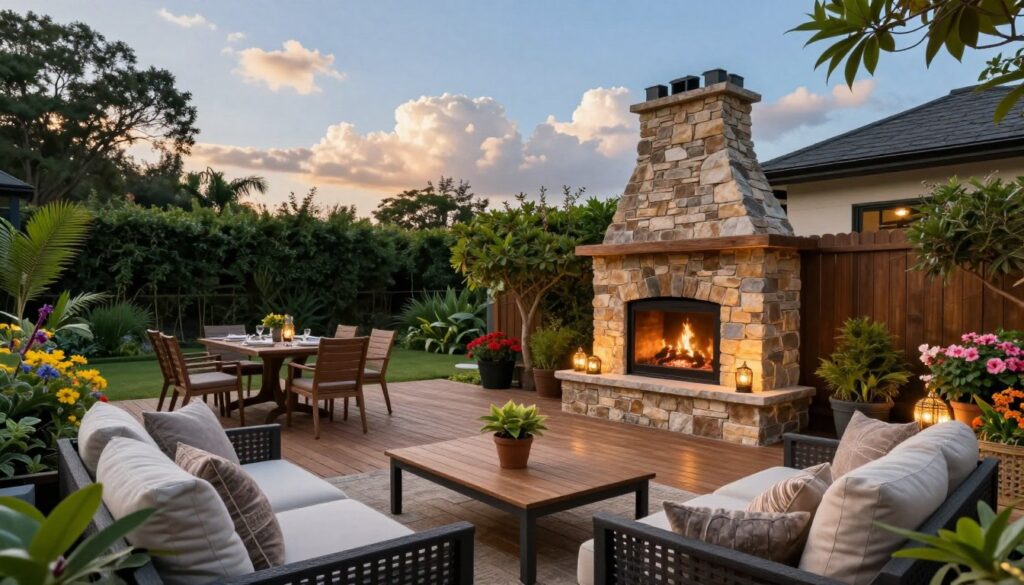
A focal point anchors your outdoor area, providing a natural destination for the eye. Fire features, such as a stone outdoor fireplace, create a dramatic vertical element that offers warmth for cool evenings. This extends the usability of your space, making it a cozy gathering spot.
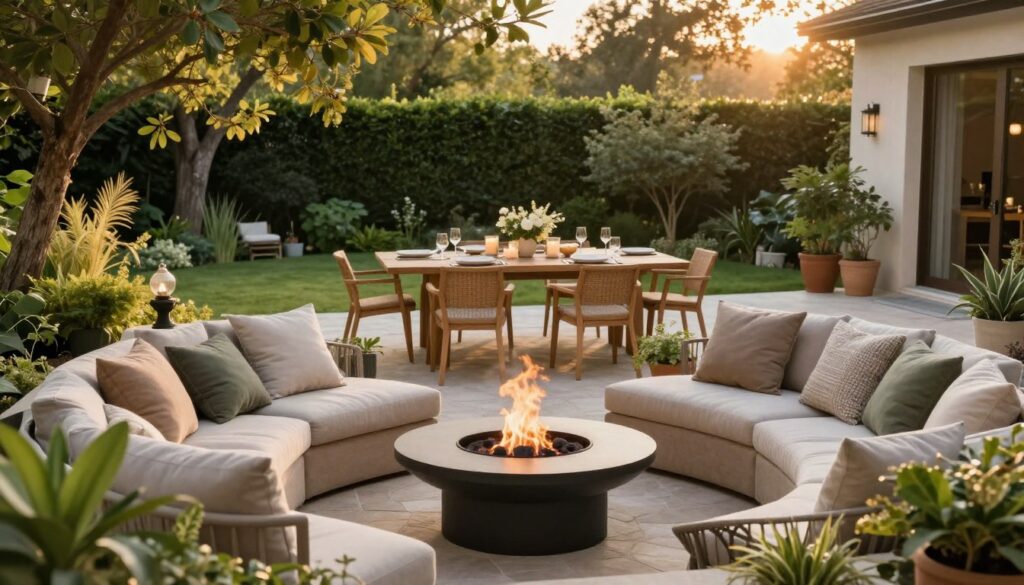
Fire pits are versatile and can be crafted from materials like weathered steel or cast concrete. They serve as casual gathering spots where guests can congregate for conversation and marshmallow roasting. Additionally, water features add a sensory dimension to your space. The soothing sound of a cascading wall fountain can mask traffic noise, while a sleek bubbler introduces a calming quality.
Shade and Shelter: Pergolas, Umbrellas, and Awnings
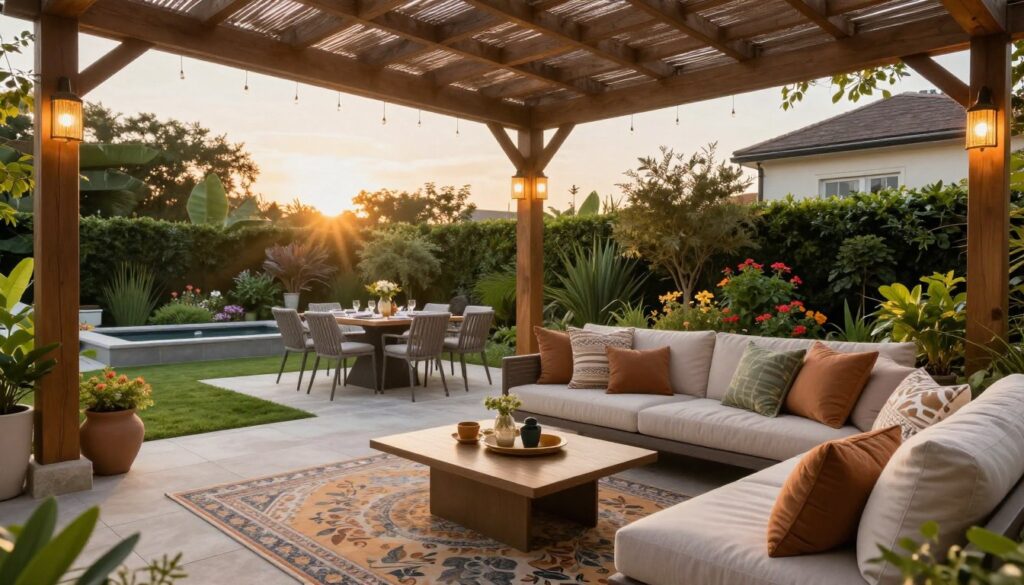
Shade structures are essential for comfort. Classic wood pergolas can support climbing vines, such as wisteria or grape, providing natural coverage. For on-demand sun protection, consider motorized retractable awnings over patios or decks. Roofed pavilions offer permanent protection, making your outdoor room functional even during light rain or intense midday sun.
Adjustable umbrellas or awnings allow for flexible shade control, ensuring that your outdoor area remains comfortable throughout the day.
Lighting Strategies for Ambience and Safety
Effective lighting can transform your outdoor space after sunset. A layered lighting strategy combines various elements to enhance both safety and ambiance. Path lights ensure safe navigation, while task lighting illuminates grill stations. Accent uplighting can highlight specimen trees or architectural walls, creating a visually appealing environment.
Ambient string lights overhead provide a warm, inviting glow, perfect for evening gatherings. Solar-powered lights are ideal for DIY-friendly installation along walkways and garden beds. Modern LED solar fixtures, like those from Ring and Philips Hue, offer smart controls and impressive brightness without the need for wiring.
| Design Element | Description | Benefits |
|---|---|---|
| Fire Features | Stone outdoor fireplaces or fire pits | Creates warmth and a gathering spot |
| Water Features | Cascading wall fountains or sleek bubblers | Adds calming sounds and visual interest |
| Pergolas | Wood structures supporting climbing vines | Provides natural shade and aesthetic appeal |
| Awnings | Motorized retractable covers | Offers flexible sun protection |
| Lighting | Path lights, task lights, and string lights | Enhances safety and creates ambiance |
These design enhancements work together synergistically. A pergola defines the room, a fire pit serves as a focal point, and layered lighting extends the usability of your space well into the evening hours. For more insights on how to design outdoor spaces, check out this resource.

Privacy and Functional Considerations in Outdoor Living Spaces
Creating a peaceful retreat in your backyard involves thoughtful planning for privacy and functionality. Addressing these aspects ensures your outdoor area becomes a haven for relaxation and socializing.
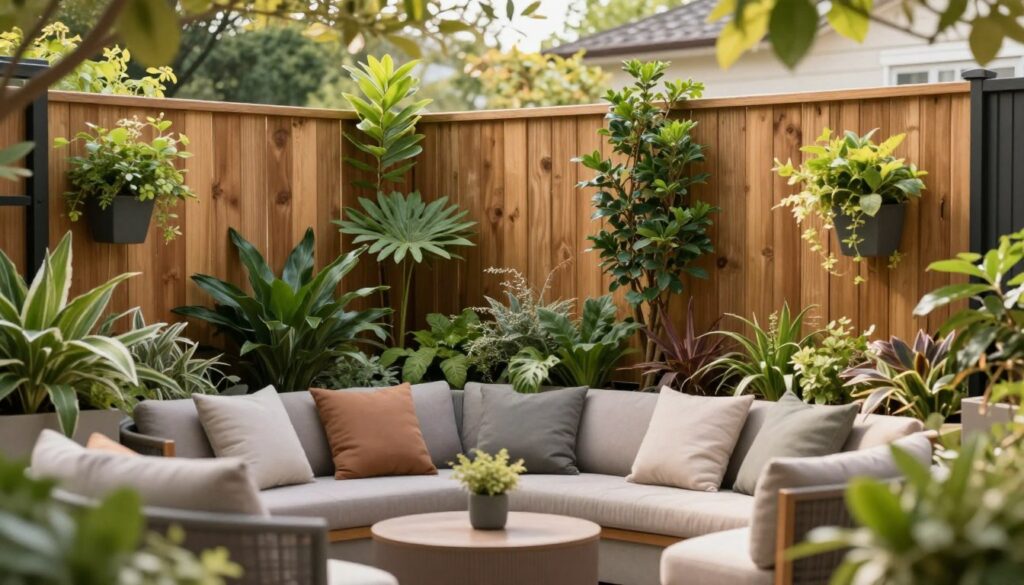
One effective way to establish visual boundaries is through the use of hedges, fences, and screens. Large ornamental planters or hanging baskets can add vibrant colors while creating a barrier on decks and patios. Outdoor fabric can also be utilized for colorful screens and curtains, providing immediate privacy.
For a more permanent solution, consider planting hedges. Hardy evergreen varieties offer year-round coverage but require regular maintenance. Trees with dense foliage and low branches can also serve as effective screens, although they may take time to grow into their full potential.
Fences are another great option. They not only define property boundaries but also create a secure area for children and pets. Options range from classic wood to low-maintenance vinyl and modern horizontal slat designs, allowing you to choose a style that fits your aesthetic.
Planning Seating and Traffic Flow for Comfort and Usability
When arranging seating, consider where it will not interfere with other landscape uses. Position seating areas to provide pleasant views, ideally near fragrant plants or water features. This enhances the experience and makes your outdoor area more inviting.
Clear pathways are essential for effective traffic flow. Ensure that routes between different zones—like from the house to the outdoor kitchen or the dining area to the fire pit—feel natural and uncluttered. This will encourage guests to move freely throughout the space.
Low retaining walls and built-in stone benches can serve as dual-purpose solutions. They not only define different functional areas but also provide additional seating without taking up too much space.
Integrating Landscape Features and Materials Harmoniously
When designing your outdoor area, consider how various materials work together. Aim for harmony in hardscaping, furniture, and structures. For example, pairing bluestone patios with teak furniture and cedar pergolas creates a cohesive look that complements your home’s architecture.
Using ornamental planters and raised garden beds as flexible privacy screens allows you to reposition them seasonally. This not only adds color and texture but also helps block sightlines from neighboring properties.
By implementing these strategies, you can create a comfortable and private outdoor living area that enhances your lifestyle. For more insights on landscape design, check out this resource.

Conclusion
Creating a remarkable outdoor area is about more than just adding furniture and features; it’s about crafting a thoughtful extension of your home. This design enhances daily life, strengthens family bonds, and boosts property value.
Key elements such as a focal point, flexible seating, a functional cooking area, adequate shade, and layered lighting work together to create both beauty and practicality. Incorporating privacy solutions like hedges or screens ensures the space feels like a true retreat.
Start your project by assessing your backyard’s unique conditions and identifying the primary activities you want to support. Even small improvements, like adding a pergola or upgrading to weather-resistant furniture, can transform your area over time.
Consulting with a landscape design professional can help you avoid costly mistakes and achieve a cohesive design. Remember, every home has the potential for a stunning outdoor area. With the right planning, you can create a cherished space for memorable gatherings and peaceful moments.
FAQ
What are the essential features of an outdoor living area?
How can I enhance my backyard for family gatherings?
What materials are best for outdoor furniture?
How do I create a focal point in my outdoor space?
What are some effective lighting strategies for outdoor areas?
How can I ensure privacy in my outdoor living area?
What should I consider when planning seating arrangements?
Have you ever wondered what is an outdoor living space and how it can transform your backyard into a cozy retreat? A well-designed outdoor living space serves as an intentional extension of your home, creating the perfect place to relax, entertain guests, dine outdoors, and enjoy nature. It turns an ordinary yard into a functional, inviting space that enhances your lifestyle and adds lasting value to your property.
Unlike a simple yard, this area features designated zones for seating, cooking, and entertaining, much like the rooms inside your home. From a small patio with a bistro set to a grand deck complete with an outdoor kitchen, any backyard can become a delightful living area.
The modern trend in outdoor design has evolved significantly. Today’s spaces rival indoor rooms in comfort and style, making them perfect for year-round use. This guide will explore the defining characteristics, benefits, and essential components of these spaces, helping you create a functional and inviting area that enhances your home.
Key Takeaways
- Outdoor areas can enhance relaxation and social interaction.
- Designated zones make these spaces functional and inviting.
- Any backyard, regardless of size, can be transformed.
- Modern designs offer comfort comparable to indoor rooms.
- Creating such spaces increases usable square footage without major renovations.
Understanding What Is an Outdoor Living Space
Transforming your backyard into a stylish retreat can enhance your home’s appeal. A well-designed outdoor living space serves as a functional extension of your interior, creating defined zones for various activities like dining, lounging, and cooking.
The main difference between a yard and a true outdoor living area lies in the intentional integration of hardscaping, furniture, lighting, and shelter elements. These features make the space inviting and usable throughout the year.
Defining Outdoor Living Spaces
An outdoor living space is a carefully crafted exterior area designed to function as an extension of the home. This area includes specific zones for activities, allowing for a seamless flow between indoor and outdoor environments.
Common Types: Patios, Decks, Gazebos, and More
Patios are typically ground-level paved areas directly adjacent to the home. They are perfect for flat backyards and can be made from various materials, including concrete, bricks, pavers, or flagstones.
Decks, on the other hand, provide elevated platforms ideal for sloped or uneven terrain. Traditionally built from pressure-treated wood, they now often feature composite lumber made from recycled materials, offering low-maintenance options.
Gazebos are freestanding, roofed structures that create a distinct outdoor room. They serve as focal points within a larger outdoor living area, providing shade and shelter.
Essential Elements: Seating, Lighting, and Structures
To create a functional outdoor living space, essential elements like seating, lighting, and structures must be considered. Comfortable seating allows for relaxation and social interaction, while proper lighting enhances ambience and safety.
Structures such as pergolas not only provide shade but also add architectural interest. Combining these elements effectively transforms any backyard into a space that can be enjoyed day and night.
Successful outdoor living areas often layer multiple types—such as a patio for dining, a deck for lounging, and a gazebo for shaded relaxation—to create a cohesive design. Understanding these foundational types and elements is the first step in planning an outdoor living space that complements your family’s lifestyle and architectural style.
For more insights on enhancing your outdoor living area, check out this resource.
Key Benefits of Creating an Outdoor Living Space
Envision a welcoming area that invites family members to step outside and share meaningful experiences. This transformation not only enhances your home but also fosters connections among loved ones. Here are some key benefits of designing such a space:
Enhancing Family Connection and Social Gatherings
Having a dedicated outdoor area naturally draws family members outside. It creates a shared environment where connection happens organically. Meals, conversations, and leisure time become special moments in this inviting setting.
Moreover, the space serves as an ideal venue for entertaining guests. From casual weekend barbecues to milestone celebrations, flexible seating arrangements adapt to gatherings of any size. This adaptability makes it a perfect place for social interactions.
Increasing Home Value and Usable Living Area
Investing in an outdoor living area significantly boosts your home’s value. This addition increases usable living space without the expense of a full-scale renovation. Real estate professionals often highlight well-designed outdoor areas as desirable features that set homes apart in competitive markets.
In fact, a well-constructed outdoor kitchen can further elevate your property’s appeal. Simple setups with propane grills or more elaborate designs with electrical and water lines can make a substantial difference in resale value.
Promoting Health, Relaxation, and Wellbeing
Spending time outdoors has numerous health benefits. Fresh air and natural sunlight provide essential vitamin D, while being surrounded by plants reduces stress. An outdoor living area becomes a dedicated place for relaxation and mindfulness.
Imagine enjoying quiet morning coffee on a patio or unwinding by a fire feature in the evening. This versatility allows the space to serve multiple purposes—a dining area, a lounge, a play zone, and a retreat—all within one thoughtfully designed backyard.
In conclusion, the combination of social, financial, and health benefits makes creating an outdoor living area one of the most impactful home improvements a homeowner can undertake.
Core Components of Successful Outdoor Living Spaces
Creating a successful outdoor area involves selecting the right components that blend functionality with style. The following elements are essential for crafting an inviting and practical environment.
Patios and Decks: Materials and Layout Options
Choosing the right materials for patios and decks is crucial. Concrete offers affordability, while brick and pavers provide a classic look. Flagstone, though premium, adds a natural touch that enhances aesthetics and durability.
For decks, traditional pressure-treated wood requires annual sealing to maintain its integrity. Alternatively, modern composite lumber, such as those from Trex and TimberTech, resists fading and staining, making it a low-maintenance option. Vinyl and all-plastic decking are also available for those seeking further durability.
Outdoor Kitchens and Cooking Stations
An outdoor kitchen can transform a backyard into a true living area. Simple setups with built-in grills keep the cook connected to guests. More elaborate stations can include sinks, refrigerators, and even pizza ovens.
Even a compact outdoor kitchen with a quality grill and prep surface can significantly enhance functionality. This setup does not require extensive plumbing or electrical work, making it accessible for many homeowners.
Furniture: Choosing Durable and Comfortable Pieces
Selecting the right furniture is vital for creating a welcoming atmosphere. Look for weather-resistant materials such as teak, which has natural oils that resist decay, or powder-coated aluminum, known for its rust resistance.
All-weather wicker provides a classic look while ensuring durability. For cushions and upholstery, performance fabrics like those from Sunbrella resist fading and mildew, offering comfort comparable to indoor furnishings.
Arranging furniture effectively creates distinct zones for dining, lounging, and conversation. Ensure adequate traffic flow and clear sightlines to focal points, enhancing the overall experience.
Built-in seating, such as stone benches or low retaining walls, can supplement movable chairs, reducing the need for additional outdoor furniture and increasing versatility.
Design Enhancements to Elevate Your Outdoor Space
Enhancing your outdoor area involves thoughtful design elements that create an inviting atmosphere. Incorporating focal points, shade structures, and effective lighting can transform your backyard into a true retreat. Here’s how to elevate your outdoor space with these key enhancements.
Incorporating Focal Points: Fireplaces, Fire Pits, and Water Features
A focal point anchors your outdoor area, providing a natural destination for the eye. Fire features, such as a stone outdoor fireplace, create a dramatic vertical element that offers warmth for cool evenings. This extends the usability of your space, making it a cozy gathering spot.
Fire pits are versatile and can be crafted from materials like weathered steel or cast concrete. They serve as casual gathering spots where guests can congregate for conversation and marshmallow roasting. Additionally, water features add a sensory dimension to your space. The soothing sound of a cascading wall fountain can mask traffic noise, while a sleek bubbler introduces a calming quality.
Shade and Shelter: Pergolas, Umbrellas, and Awnings
Shade structures are essential for comfort. Classic wood pergolas can support climbing vines, such as wisteria or grape, providing natural coverage. For on-demand sun protection, consider motorized retractable awnings over patios or decks. Roofed pavilions offer permanent protection, making your outdoor room functional even during light rain or intense midday sun.
Adjustable umbrellas or awnings allow for flexible shade control, ensuring that your outdoor area remains comfortable throughout the day.
Lighting Strategies for Ambience and Safety
Effective lighting can transform your outdoor space after sunset. A layered lighting strategy combines various elements to enhance both safety and ambiance. Path lights ensure safe navigation, while task lighting illuminates grill stations. Accent uplighting can highlight specimen trees or architectural walls, creating a visually appealing environment.
Ambient string lights overhead provide a warm, inviting glow, perfect for evening gatherings. Solar-powered lights are ideal for DIY-friendly installation along walkways and garden beds. Modern LED solar fixtures, like those from Ring and Philips Hue, offer smart controls and impressive brightness without the need for wiring.
| Design Element | Description | Benefits |
|---|---|---|
| Fire Features | Stone outdoor fireplaces or fire pits | Creates warmth and a gathering spot |
| Water Features | Cascading wall fountains or sleek bubblers | Adds calming sounds and visual interest |
| Pergolas | Wood structures supporting climbing vines | Provides natural shade and aesthetic appeal |
| Awnings | Motorized retractable covers | Offers flexible sun protection |
| Lighting | Path lights, task lights, and string lights | Enhances safety and creates ambiance |
These design enhancements work together synergistically. A pergola defines the room, a fire pit serves as a focal point, and layered lighting extends the usability of your space well into the evening hours. For more insights on how to design outdoor spaces, check out this resource.
Privacy and Functional Considerations in Outdoor Living Spaces
Creating a peaceful retreat in your backyard involves thoughtful planning for privacy and functionality. Addressing these aspects ensures your outdoor area becomes a haven for relaxation and socializing.
One effective way to establish visual boundaries is through the use of hedges, fences, and screens. Large ornamental planters or hanging baskets can add vibrant colors while creating a barrier on decks and patios. Outdoor fabric can also be utilized for colorful screens and curtains, providing immediate privacy.
For a more permanent solution, consider planting hedges. Hardy evergreen varieties offer year-round coverage but require regular maintenance. Trees with dense foliage and low branches can also serve as effective screens, although they may take time to grow into their full potential.
Fences are another great option. They not only define property boundaries but also create a secure area for children and pets. Options range from classic wood to low-maintenance vinyl and modern horizontal slat designs, allowing you to choose a style that fits your aesthetic.
Planning Seating and Traffic Flow for Comfort and Usability
When arranging seating, consider where it will not interfere with other landscape uses. Position seating areas to provide pleasant views, ideally near fragrant plants or water features. This enhances the experience and makes your outdoor area more inviting.
Clear pathways are essential for effective traffic flow. Ensure that routes between different zones—like from the house to the outdoor kitchen or the dining area to the fire pit—feel natural and uncluttered. This will encourage guests to move freely throughout the space.
Low retaining walls and built-in stone benches can serve as dual-purpose solutions. They not only define different functional areas but also provide additional seating without taking up too much space.
Integrating Landscape Features and Materials Harmoniously
When designing your outdoor area, consider how various materials work together. Aim for harmony in hardscaping, furniture, and structures. For example, pairing bluestone patios with teak furniture and cedar pergolas creates a cohesive look that complements your home’s architecture.
Using ornamental planters and raised garden beds as flexible privacy screens allows you to reposition them seasonally. This not only adds color and texture but also helps block sightlines from neighboring properties.
By implementing these strategies, you can create a comfortable and private outdoor living area that enhances your lifestyle. For more insights on landscape design, check out this resource.
Conclusion
Creating a remarkable outdoor area is about more than just adding furniture and features; it’s about crafting a thoughtful extension of your home. This design enhances daily life, strengthens family bonds, and boosts property value.
Key elements such as a focal point, flexible seating, a functional cooking area, adequate shade, and layered lighting work together to create both beauty and practicality. Incorporating privacy solutions like hedges or screens ensures the space feels like a true retreat.
Start your project by assessing your backyard’s unique conditions and identifying the primary activities you want to support. Even small improvements, like adding a pergola or upgrading to weather-resistant furniture, can transform your area over time.
Consulting with a landscape design professional can help you avoid costly mistakes and achieve a cohesive design. Remember, every home has the potential for a stunning outdoor area. With the right planning, you can create a cherished space for memorable gatherings and peaceful moments.