
Mastering how to design outdoor living spaces starts with a simple, powerful question: What if your backyard could become a seamless extension of your home’s comfort and style?
As warmer weather arrives, the desire to expand our homes outside grows strong. This creates a perfect opportunity to craft a personal retreat. Your yard can transform into a vital zone for family fun and hosting friends.
Professional designers like Aragon Landscaping LLC capture this vision beautifully. Their work shows a single environment serving many roles. One area might host a dinner party, while another offers a quiet spot to unwind.
The goal is a cohesive flow from inside your house to the outside world. Thoughtful planning makes this connection feel natural and intentional. It turns a simple plot of land into a valuable part of your daily life.
By evaluating what your family truly needs, you create a functional and inviting area. This process enhances your lifestyle and adds lasting value to your property.
Key Takeaways
- Begin with a clear vision for how your yard will function for your family and guests.
- Warmer seasons inspire the transformation of exterior areas into extensions of the home.
- A well-planned environment can serve multiple purposes, from dining to relaxation.
- Successful planning ensures a logical connection between your indoor and outdoor living spaces.
- Assessing your specific needs turns any yard into a functional and comfortable zone.
- Professional examples showcase the potential for multifunctional gathering spots.
- The right plan enhances daily life and increases property enjoyment.
Understanding the Basics of Outdoor Living Spaces
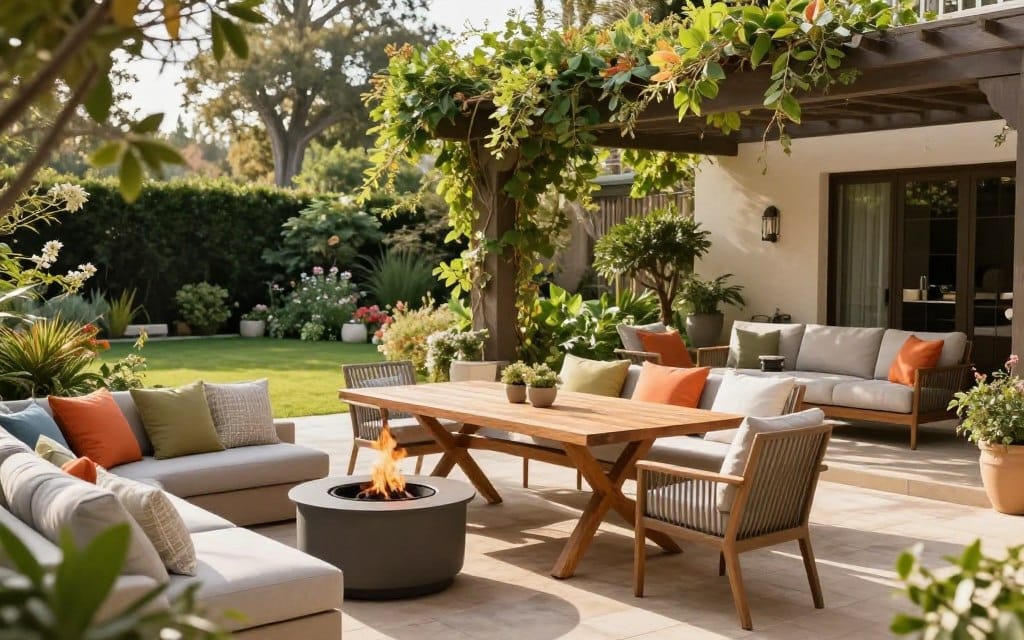
Expert landscape architects approach exterior zones with the same careful consideration as interior rooms. David Pfeiffer emphasizes that logical connections between areas matter outside just as they do inside a house. Think about how people will move through and use your backyard.
Matthew Cunningham suggests looking beyond your property lines. Notice how sunlight moves across your yard during different times of day. Consider prevailing wind patterns to avoid creating uncomfortable gusts in seating areas.
Natural elements like trees and garden plants help define different zones within your area. They provide shade, privacy, and visual interest. Hardscape features such as a stone patio create stable foundations for furniture and gatherings.
The right color palette and material choices make the space feel like an extension of your home. Comfort comes from layering different features together. Water elements, fire pits, and strategic lighting add warmth and atmosphere.
Following these fundamental tips creates a cohesive result. Your yard becomes a personalized retreat that fits your lifestyle perfectly. It blends natural beauty with practical function for everyday enjoyment.
Choosing the Ideal Hardscape: Decks, Patios, and Pergolas
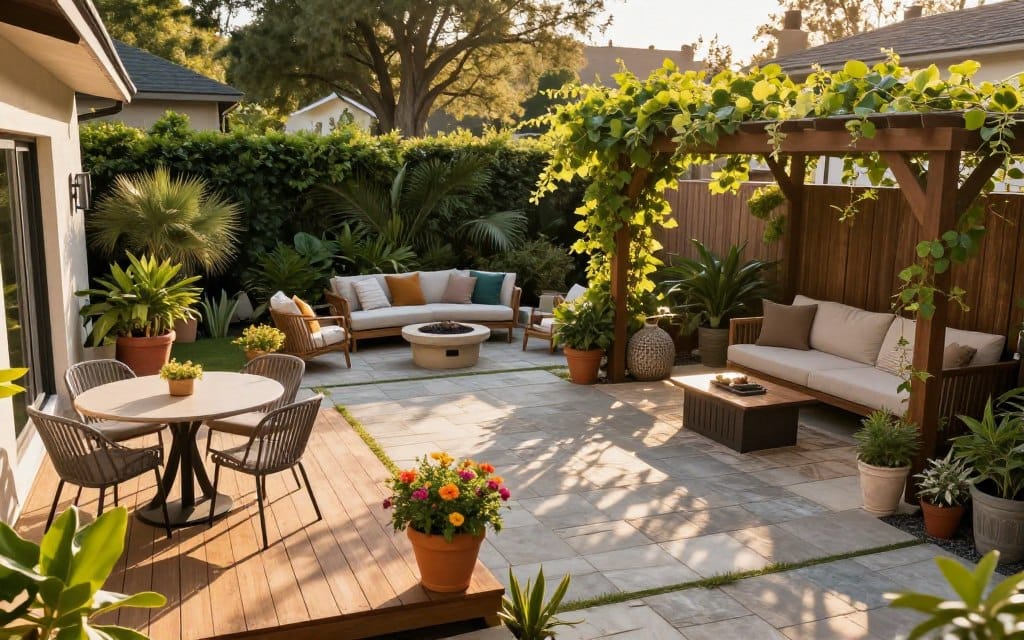
Decks, patios, and pergolas each offer unique benefits for creating distinct zones in your landscape. The right surface defines your area and supports all activities. This choice is a critical step in crafting your personal retreat.
Landscape ecologist Kelley Weston notes that north- and east-facing spots can be unusable in winter. They often stay chilly in summer too. Consider sun exposure and wind patterns when placing your hardscape.
A well-placed patio serves as a stable foundation. It provides a level surface for dining tables and chairs. Integrating a pergola adds necessary shade for comfort.
A fire pit becomes a central feature for cooler evenings. It extends the time you enjoy your backyard. Balance these hard materials with soft elements like plants and gardens.
| Feature | Best For | Common Materials |
|---|---|---|
| Deck | Elevated areas, slopes, connecting to house | Pressure-treated wood, composite, cedar |
| Patio | Level ground, dining sets, large gatherings | Pavers, concrete, flagstone |
| Pergola | Shade definition, vertical interest, climbing plants | Cedar, vinyl, aluminum |
Strategic placement creates a logical flow from your house. It connects indoor comforts with the natural beauty outside. Your hardscape choices shape the entire experience.
Integrating Natural Elements and Landscaping
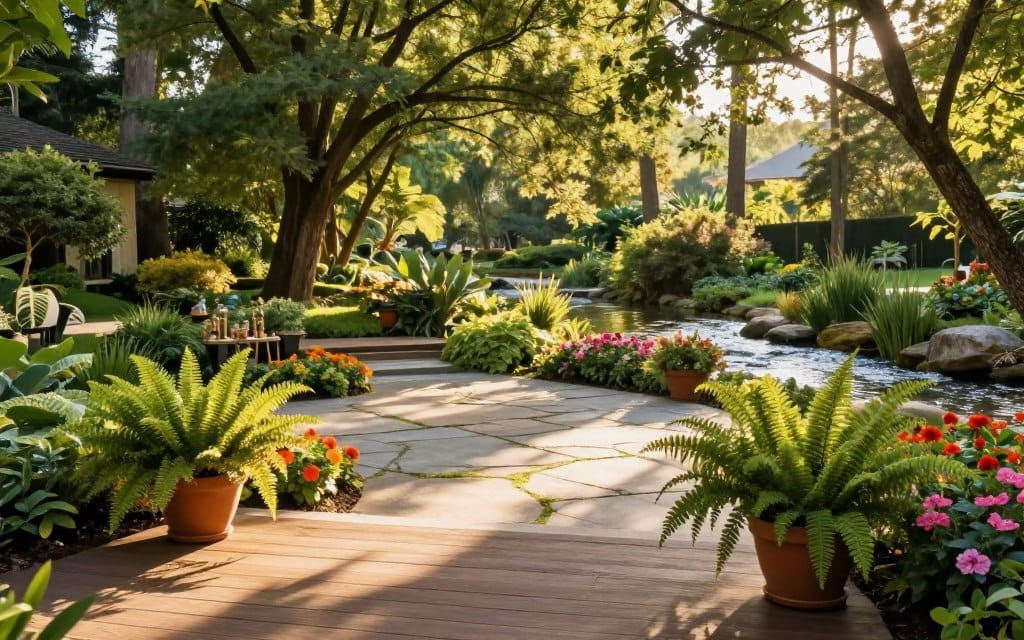
Incorporating shrubs, trees, and water features brings life and tranquility to any exterior area. This blend softens hard edges and creates a welcoming atmosphere.
Shirley Watts, for example, favors rounded shrubs like boxwoods and agaves. These plants thrive in her California climate with minimal care.
Taller trees and bushes form natural privacy walls. They also cast cooling shade over seating zones, boosting comfort.
Water elements add a soothing soundtrack. Even a small fountain makes a space feel serene.
A fire pit extends use into cooler evenings. Surround it with cozy chairs for a perfect gathering spot.
Choosing native species keeps your gardens vibrant. They adapt well to local conditions, reducing upkeep.
| Natural Element | Primary Benefit | Best Placement | Maintenance Level |
|---|---|---|---|
| Shrubs (e.g., Boxwood) | Defines space, adds structure | Along borders, near seating | Low |
| Deciduous Trees | Provides seasonal shade & privacy | West side for afternoon sun | Moderate |
| Water Feature | Creates a tranquil soundscape | Central focal point or quiet corner | Low to Moderate |
| Fire Pit | Extends seasonal use, provides warmth | On a stable patio surface | Low |
Merging these living elements with your hardscape materials achieves balance. Your backyard becomes a reflection of personal style.
Practical Tips and Furniture Ideas for an Inviting Outdoor Space
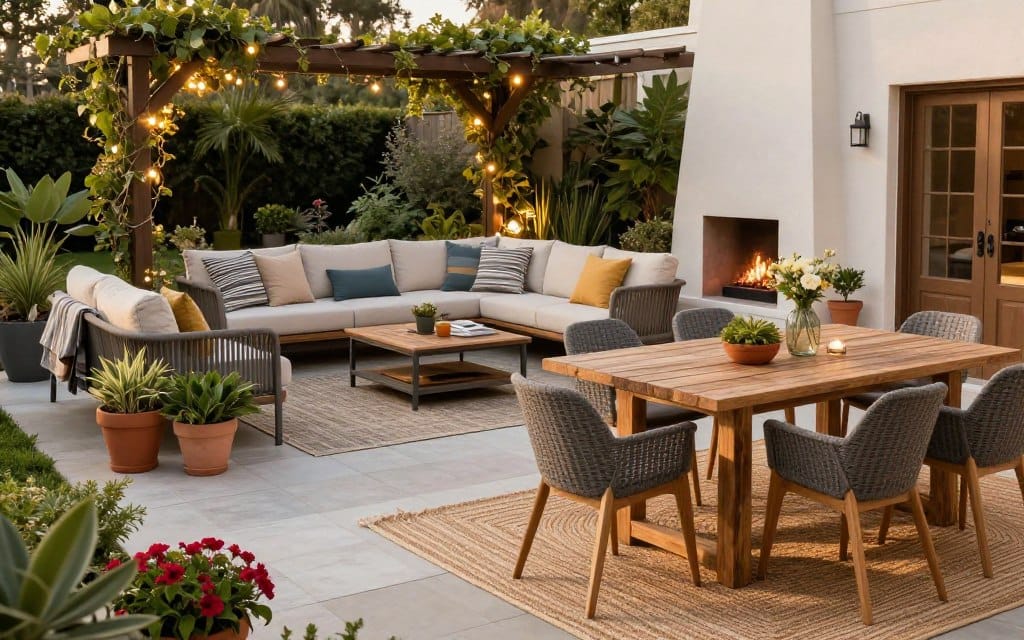
David Pfeiffer highlights the value of movable tables to increase the utility of your personal retreat. Small, portable surfaces for cocktails and snacks offer great flexibility. This simple idea lets you adapt your layout for any occasion.
Selecting durable, weather-resistant pieces is essential. Choose fabrics that are easy to clean and can handle sun and rain. Your selections should complement the style of your home’s interior for a cohesive look.
Adding a fire pit creates a cozy focal point for cooler evenings. It extends the time you can enjoy your yard. Colorful cushions and pillows boost both visual appeal and physical comfort on your patio or deck.
| Furniture Type | Primary Function | Ideal Material | Flexibility |
|---|---|---|---|
| Modular Sofa | Relaxing lounge space | Powder-coated aluminum, Sunbrella fabric | High |
| Bistro Set | Intimate dining area | Wrought iron or teak | Medium |
| Adirondack Chairs | Casual seating comfort | Cedar or recycled plastic | Low |
| Movable Side Tables | Versatile surface for drinks | Lightweight resin or metal | Very High |
Versatile furniture ideas allow your backyard to serve multiple roles. A dining spot can quickly become a relaxing lounge. Efficient use of every square foot makes even a compact yard feel like a luxurious escape.
Lighting and Accessories to Enhance Functionality
Strategic illumination transforms your yard from a daytime retreat into a nighttime sanctuary. Proper lighting makes pathways and cooking zones safer after sunset. This extends the time you enjoy your outdoor living space.
Up-lighting trees and fencing adds dramatic visual interest. It makes your backyard feel larger. Decorative lights along steps ensure safety with elegance.
Accessories define zones and boost comfort. An outdoor rug anchors your seating area. Colorful throw pillows make furniture feel inviting.
These elements create a warm ambiance. Guests feel welcome to stay longer. Your patio becomes perfect for evening events.
| Lighting Type | Primary Purpose | Best Placement | Fixture Ideas |
|---|---|---|---|
| Ambient | General illumination & mood | Overhead on pergolas, string lights | Lanterns, globe lights |
| Task | Safety for specific activities | Along paths, near grill/table | Post lights, spotlights |
| Accent | Highlight landscape features | At base of trees, near water elements | Well lights, uplights |
Choosing the right fixtures highlights beautiful plants or water features. A well-lit living space provides visibility and mood. These tips ensure your area is both functional and magical after dark.
Step-by-Step Guide: how to design outdoor living spaces
Transforming your yard requires a logical sequence, from initial purpose to final decorative touches. A systematic approach ensures your project is both beautiful and functional.
Start by defining the primary use for your area. Will it host dinner parties, provide a lounge for relaxation, or be a play zone for kids? This decision guides every other choice.
Next, sketch a layout that connects your house to the backyard. A seamless flow makes the transition feel natural and inviting.
Select durable materials for surfaces like your patio or deck. Choose local plants that thrive with minimal care. This keeps maintenance low.
Incorporate character with essential features. A fire pit offers warmth, while a water fountain adds a tranquil soundscape.
Pick furniture that matches your home’s style. Use color and patterns on cushions to create a cohesive look. Your selections should be weather-resistant.
| Design Phase | Key Action | Focus Elements | Desired Outcome |
|---|---|---|---|
| 1. Foundation | Define Purpose & Layout | Flow, Zoning | Cohesive Plan |
| 2. Structure | Select Surfaces & Plants | Materials, Greenery | Durable, Low-Upkeep Base |
| 3. Comfort | Add Features & Furniture | Fire/Water, Seating | Functional Character |
| 4. Atmosphere | Install Lighting & Accessories | Safety, Ambiance | Extended Evening Use |
| 5. Personality | Include Final Touches | Walls, Decor | Unique, Finished Space |
Install strategic lighting for safety and mood. Path lights and overhead fixtures let you enjoy evenings outside.
Complete your outdoor living space with personal touches. Decorative walls or unique accessories reflect your style. This final layer makes the area truly yours.
Conclusion
Crafting a beautiful backyard retreat is an investment in your home’s enjoyment and value. This rewarding project transforms your property into a functional and inviting area. It seamlessly extends your living environment outdoors.
Careful selection of patio materials, furniture, and plants creates a space that reflects your personal style. These elements work together to define zones for relaxation and entertainment. Your choices should prioritize durability and comfort.
Incorporating strategic lighting and water features ensures your oasis remains usable throughout the seasons. These additions provide ambiance and extend evening gatherings. They turn a simple patio into a four-season destination.
Whether you have a vast yard or a compact corner, the right ideas maximize every square foot. Let this guide inspire your own transformation. Start planning your perfect outdoor living space today.

2 Responses