How to Calculate Sod Installation Costs: Pallet Rates & Hidden Fees
To estimate the cost sod installation for your home, multiply the measured area by the grass price, then add labor, preparation, delivery, and site fees. As Warren Buffett said, “Price is what you pay. Value is what you get.” That idea matters when planning a new lawn.
In May 2026, Homewyse placed basic professional work at $2.12–$3.54 per square foot nationwide. Grass material averages about $0.60 per square foot, while a professionally completed project averages about $1.65 per square foot. A 2,000-square-foot yard may run about $1,200 for material alone or $3,300 with full service.
Three factors shape the total cost: grass type, site size and complexity, and whether you install sod yourself or hire a crew. This guide shows how to measure your yard, read pallet rates, plan soil preparation, spot hidden fees, and compare quotes with confidence.
Key Takeaways
- Use $2.12–$3.54 per square foot as a national basic-service benchmark.
- Separate material pricing from labor and site preparation.
- Measure the full yard before ordering pallets.
- Ask about delivery, removal, equipment, and grading charges.
- Compare written quotes that list every service.
At a Glance
Most lawn project budgets combine material, labor, delivery, ground preparation, old-grass removal, and disposal. A clear quote separates each item. Compare rates for the yard size, access, soil condition, and grass variety before choosing a crew or supplier. This approach reveals fees that a headline price may hide.
Typical material pricing runs from $0.30 to $0.85 per square foot. Professional installation labor often adds $1 to $2 per square foot. The total cost also depends on delivery distance, site access, grading needs, and the selected grass type.
| Item | Typical range | Planning note |
|---|---|---|
| Material only | $0.30–$0.85 per square foot | Varies by grass variety |
| Professional labor | $1–$2 per square foot | May exclude preparation |
| Delivery | $65–$230 per load | Some suppliers charge $100–$250 |
| One pallet | 400–500 square feet | Often weighs 2,500–3,000 pounds |
- Plan for delivery equipment because a full pallet is heavy.
- Add 5%–10% extra material for curves, openings, and trimming.
- Keep a small surplus for future patching.
- Compare itemized quotes before selecting a provider.
Sod Installation Cost: Core Pricing and Budget Ranges
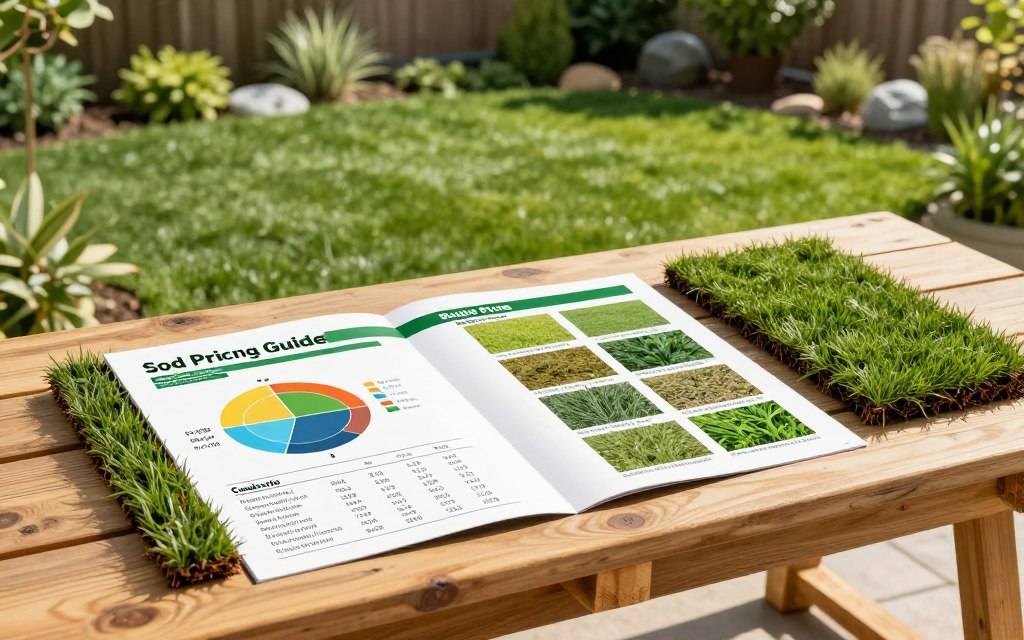
Homeowners can build a useful budget by separating turf, crew time, site work, delivery, and disposal. The final cost sod installation depends on yard size, grass type, access, and preparation needs.
Material, Labor, and Complete Project Pricing
Sod-only pricing usually falls between $0.30 and $0.85 per square foot. Professional labor adds about $1.00 to $2.00 per square foot, while basic preparation, removal, supplies, equipment, and hauling can raise the total.
- Material: turf purchased from a local supplier
- Labor: crew work for laying and securing grass
- Preparation: grading, soil work, and surface cleanup
- Extra services: delivery, old lawn removal, and disposal
National and Regional Pricing Differences
Homewyse reports a May 2026 national range of $2.12–$3.54 per square foot for basic service. Its 534-square-foot example lists turf, labor, supplies, equipment, removal, and disposal as separate categories.
| U.S. market | Typical range | Planning note |
|---|---|---|
| National | $2.12–$3.54 | Basic service |
| New York | $2.20–$3.50 | Higher urban rates |
| Atlanta | $1.30–$2.00 | Lower regional range |
| Seattle | $2.30–$3.10 | Moderate to high |
| Chicago | $1.50–$2.10 | Midrange pricing |
How to Measure Your Lawn and Calculate Sod Quantity
Accurate measurements give you a reliable project cost before you order grass. Start with a tape measure, sketch the yard, and record each section in feet.
Square-Footage Formulas for Simple and Irregular Yards
For a rectangle, multiply length by width. A 40-foot by 25-foot space equals 1,000 square feet. This figure helps you compare prices per square foot and estimate the material cost.
For an uneven lawn, divide the area into rectangles, triangles, or circles. Find each shape’s area, then add the results. Subtract enclosed openings, such as beds or patios. A 10-by-5-foot flower bed covers about 50 square feet, leaving 950 square feet.
Accounting for Cutting Waste and Extra Sod
Cutting around curves and edges creates waste. Add 10% to the measured area: 950 × 1.10 = 1,045 square feet. That is how much sod to order, although suppliers may sell by the pallet, roll, or per square. Confirm their rounding rules before purchase.
- Measure finished surfaces, including enclosed openings.
- Keep the sketch to check quantities and delivery size.
- Allow extra time for trimming and soil preparation.
Sod Pallet Rates, Coverage, and Grass-Type Pricing
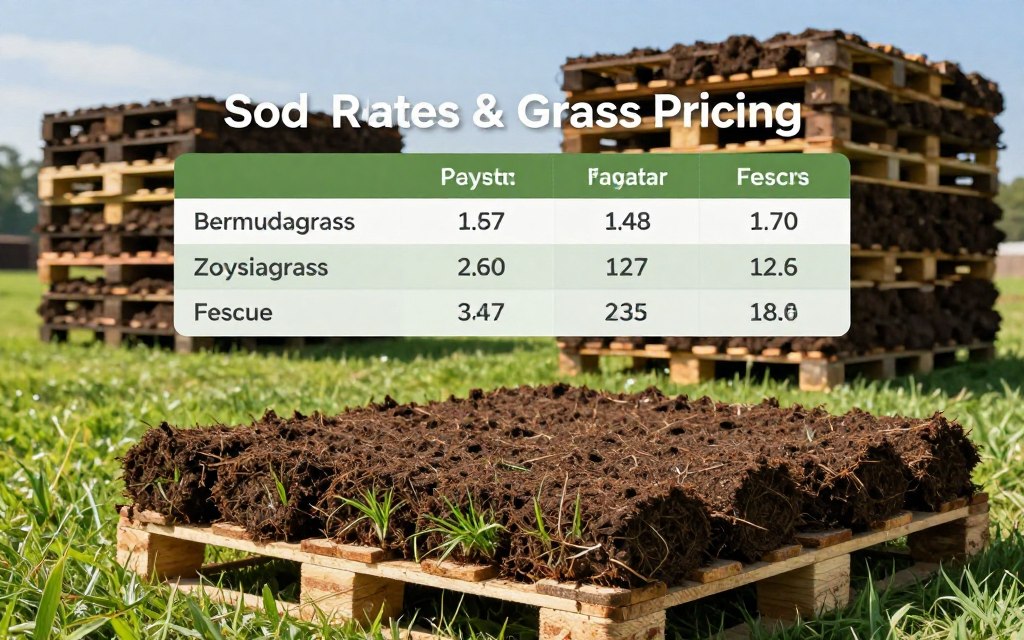
Pallet size can change your quote more than expected. Suppliers may define one pallet as 400, 450, or 500 square feet, so confirm the coverage before ordering. A full pallet weighs about 2,500–3,000 pounds and may need special delivery equipment.
Coverage, Weight, and Order Minimums
Most pallets range from $150–$450, while some U.S. markets list $200–$600. Minimum requirements often run from two to six pallets. USA Sod lists a one-pallet minimum, which helps with smaller projects. Add 5%–10% for trimming and curved areas.
Prices by Grass Variety
| Grass type | Typical rate per square foot | Best planning note |
|---|---|---|
| Bermuda | $0.50–$0.90 | Heat and drought tolerance |
| St. Augustine | $0.60–$1.10 | Warm, partly shaded yards |
| Zoysia | $0.70–$1.20 | Dense growth and quality |
| Centipede | $0.40–$0.70 | Lower maintenance needs |
| Tall Fescue or Kentucky Bluegrass | $0.40–$0.75 or $0.45–$0.70 | Cool-season regions |
When Rolls Fit Better
Individual rolls often measure 2 by 5 feet, covering about 10 square feet. They run $4–$7.50 each before delivery. Rolls suit patch repairs or small yards, while full pallets usually offer a lower cost per square. For expert laying sod guidance, consider professional lawn installation.
Professional Sod Installation Labor Costs
Crew pricing depends on the shape of the yard, site access, and the preparation already completed. A clear quote shows whether the provider charges hourly or uses a flat rate for the full project.
What Basic Installation Labor Usually Includes
Basic labor may cover planning, setup, site protection, equipment, unrolling, seam packing, rolling, initial watering, and cleanup. Rates can range from $37.50–$77.50 per hour or $0.55–$1.00 per square foot. Broader professional rates often reach $1.00–$2.00 per square.
Old grass removal, major grading, drainage, irrigation, soil amendments, and disposal often create separate fees. Ask whether these tasks appear in the written scope before you compare the cost per unit.
Trees, fences, tight curves, steep slopes, narrow gates, and long carrying distances increase work time. Difficult access may raise labor by about 15%–20%. Before you hire professionals, compare the scope with Purdue University Extension’s 2015 guidance on laying sod and establishing a healthy lawn.
| Quote format | Typical range | Best use |
|---|---|---|
| Hourly labor | $37.50–$77.50 | Small or complex areas |
| Unit rate | $0.55–$2.00 | Measured project areas |
| Access adjustment | About 15%–20% | Slopes, trees, or narrow gates |
Soil Preparation and Lawn Removal Costs
A strong base helps new turf root quickly and stay level. Treat site preparation as a separate line from labor and material when reviewing a quote. This makes the final cost easier to understand.
Removing Existing Grass, Tilling, and Grading
Removing weeds, roots, old grass, and debris usually adds $0.50–$1.84 per square foot. One source reports $0.88–$1.84 with disposal, while another lists $0.50–$1.00. A sod cutter strips turf and about 3/4 inch of soil before hauling.
Tilling and grading run about $0.90–$2 per square. These services help correct compacted ground and poor drainage slopes.
Topsoil, Compost, Soil Testing, and Starter Fertilizer
A soil test costs $12–$30 per sample. Use the results to choose lime, compost, or other amendments. Topsoil costs $12–$50 per cubic yard and covers about 100 square feet at 3 inches deep. Starter fertilizer adds $0.02–$0.07 per square foot. University of Florida IFAS offers useful guidance on proper feeding.
For planning help, review professional lawn service.
Hidden Fees That Increase the Total Sod Budget
The advertised price rarely covers every service. Review the full quote for charges tied to access, hauling, water, and site conditions before approving the project.
Delivery, Handling, Pallet Deposits, and Disposal
Delivery often adds $65–$230, or $100–$250 per truckload. Distance, order size, supplier policy, and driveway access affect the final charge. Ask whether unloading and pallet handling appear as separate line items.
Suppliers may also hold a refundable deposit of $10–$20 per pallet. Other common fees include sales tax, equipment mobilization, minimum labor charges, loading, hauling, and disposal of old turf or debris.
Drainage, Irrigation, Access, and Difficult Terrain Charges
Basic above-ground sprinkler work runs about $0.29–$0.48 per square foot. Drainage corrections need a separate review because slope, soil, and standing water can require grading or added materials.
Narrow gates, slopes, and long carrying distances may raise labor by 15%–20%. Contractor supervision can add 13%–22% to the project cost. Texas A&M AgriLife’s 2020 water guidance also supports planning for higher water use while new sod establishes.
DIY Sod Installation Versus Hiring a Professional
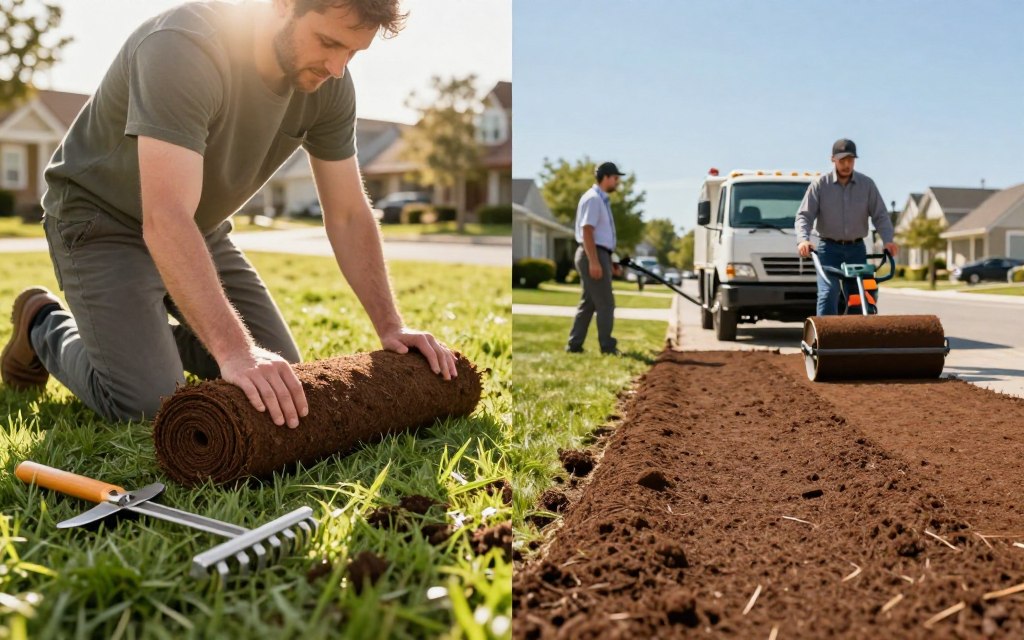
Choosing between home labor and a crew depends on your budget, schedule, yard size, and comfort with heavy work. A 1,000-square-foot project may take one to three days for a homeowner. A prepared site may take professionals about one day.
Equipment Rentals, Materials, and Physical Labor
DIY cost estimates range from $732–$1,354, or $730–$2,035 when broader preparation applies. Include grass, delivery, topsoil, compost, fertilizer, fuel, disposal, and rental fees. A sod cutter runs about $70–$115 per day. Tillers, rollers, and cutters may total $75–$150 daily.
- Plan repeated lifting and careful same-day placement.
- One pallet weighs about 2,500–3,000 pounds.
- Leave funds for tools, transport, and unexpected repairs.
When Professional Installation Provides Better Value
Professional service for 1,000 square feet usually runs $1,000–$2,200 without old-grass removal. Professionals offer speed, experience, and consistent quality. Consider them for areas over 2,000 square feet, steep slopes, compacted clay, poor drainage, or tight deadlines. This DIY versus professional lawn guide can help you compare value.
Common Mistakes When Estimating Sod Installation Costs
Small planning errors can shift a lawn budget by hundreds of dollars. Start with the finished area, not just the visible rectangle. Measure around trees, beds, paths, fences, and enclosed openings.
For example, a 40-by-25-foot space covers 1,000 square feet. Subtracting a 50-square-foot bed leaves 950 square feet. Add 10% for trimming, and the order becomes 1,045 square feet. A 5%–10% allowance helps cover curves and corners.
Do not choose grass by price alone. Zoysia runs about $0.70–$1.20 per square foot, while common Bermuda runs about $0.50–$0.90. Sun, shade, water use, climate, and soil are key factors.
Also, confirm what preparation includes. Removal, grading, topsoil, testing, fertilizer, drainage, and delivery may sit outside the quoted amount. Review this lawn pricing guide before approving work.
| Mistake | Correction | Why It Matters |
|---|---|---|
| Skipping waste | Add 5%–10% | Prevents shortages |
| Ignoring grass type | Match turf to site conditions | Improves survival |
| Assuming one quote covers all | Check delivery, taxes, disposal, deposits, equipment, watering, and replacement terms | Reveals true costs |
Practical Ways to Reduce Sod Installation Expenses
Smart comparison and careful timing can lower the price of a new lawn without sacrificing quality. Begin with an itemized scope that matches your yard size and project goals.
Comparing Itemized Quotes and Local Sod Suppliers
Request at least three quotes. Each should separate material, labor, preparation, removal, delivery, disposal, taxes, equipment, warranty terms, and other fees. Local farms may offer bulk pricing that reduces the cost per square foot by 15%–40%. Check pallet minimums and delivery zones first.
Timing Delivery, Selecting Grass, and Handling Preparation
Schedule delivery for the day you plan to install sod. This keeps new sod fresh and limits handling. Dormant warm-season turf may bring modest winter savings. Choose grass that fits local shade, drought, traffic, water access, and maintenance needs.
When safe, handle weed removal, soil testing, light grading, and basic preparation yourself. This may save $0.50–$1.00 per square foot in labor. Compare alternatives, too: seeding runs about $0.09–$0.19 per square foot, while artificial turf costs roughly $15–$19. Good planning helps you save money while protecting the lawn’s long-term value.
Conclusion
Who should check delivery before ordering?
Homeowners should confirm delivery charges, pallet minimums, unloading access, and timing before purchase. Truck fees often range from $65 to $250, depending on distance, supplier policy, and load size.
What does one pallet typically cover?
Most pallets cover about 400 to 500 square feet and weigh 2,500 to 3,000 pounds. Coverage, deposits, and minimum orders vary among regional suppliers and grass varieties.
How can homeowners lower installation costs?
Measure home’s square feet, add five to ten percent waste, compare itemized quotes, prepare suitable soil, and consider bulk purchases from a nearby farm. Select climate-fit type for lawn performance.
Why does professional work raise total cost?
Professional pricing includes labor, grading, placement, equipment, cleanup, and often delivery or removal. Homewyse’s May 2026 benchmark of $2.12–$3.54 per square foot is a starting point, not your lawn quote.